Day 1 – Paris Beginnings: Eiffel Tower & City Icons
On arrival in Paris, your private chauffeur will pick you up in his luxurious Mercedes and take you and your luggage to your Paris hotel. Once you have settled in, your chauffeur will be waiting for you in reception, ready to start your 3-week tour of France.
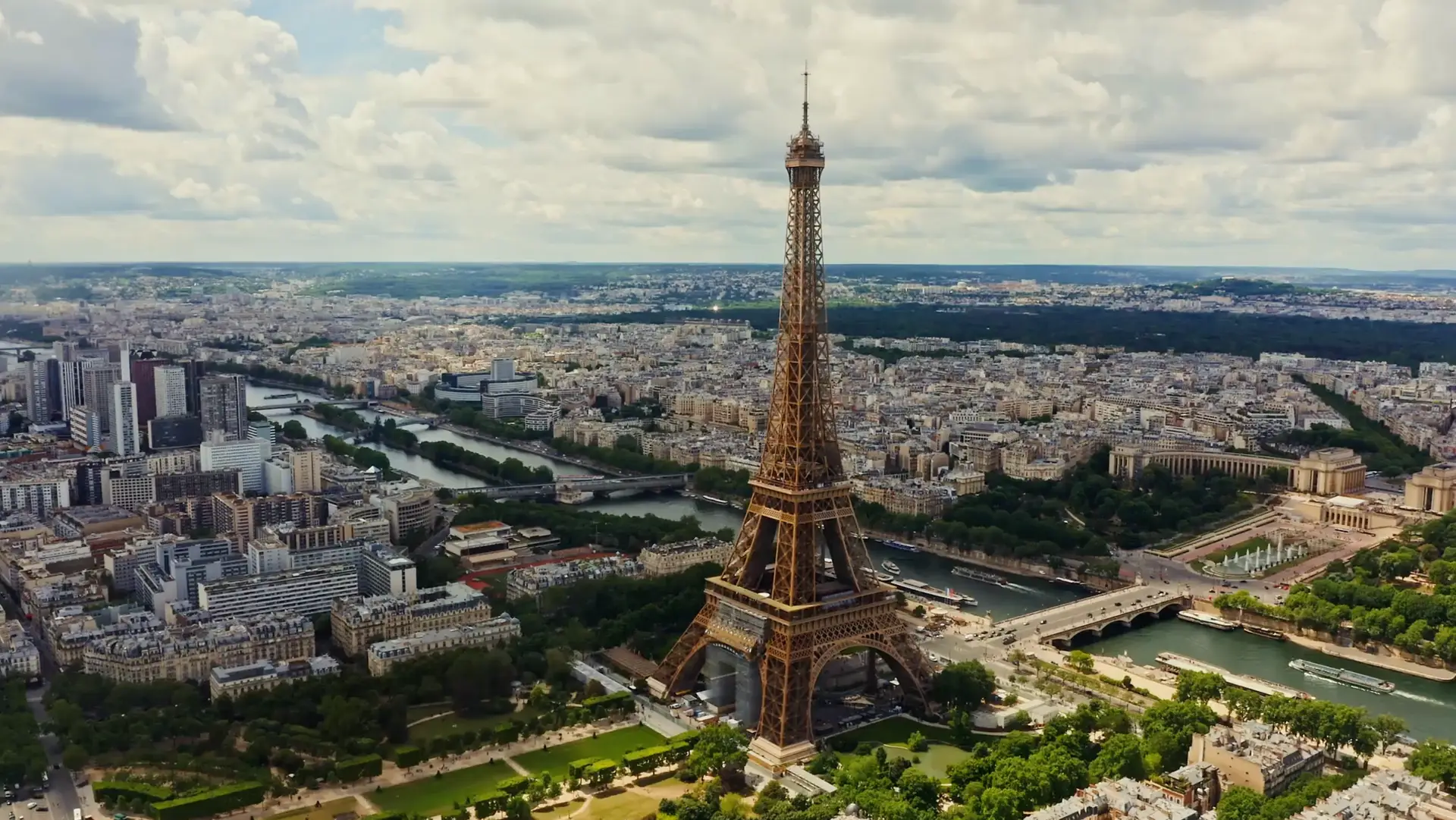
The first stop is the Eiffel Tower, which is, understandably, the world’s most visited paid tourist attraction. Your pre-purchased tickets allow you access to all levels of the Tower, where you can see unrivalled views across Paris and the neighboring cities.
The Tower comprises 8,038 metallic parts, an impressive 2,500.00 rivets, 7,300 tonnes of metal, and 60 tonnes of paint and took over 2 years to complete. Following the Tower visit, your guide will take you for lunch at a typical Parisian brasserie away from the tourists so you can experience Paris as a local.
In the afternoon, we will visit the Arc de Triomphe, the Champs-Élysées, and the Île de la Cité, where you can explore the famous Sainte-Chapelle.
At the end of the afternoon, your chauffeur will take you back to your hotel, where you can enjoy dinner at a famous Michelin eatery.

Day 2 – Paris Masterpieces: Louvre & Monet’s Water Lilies
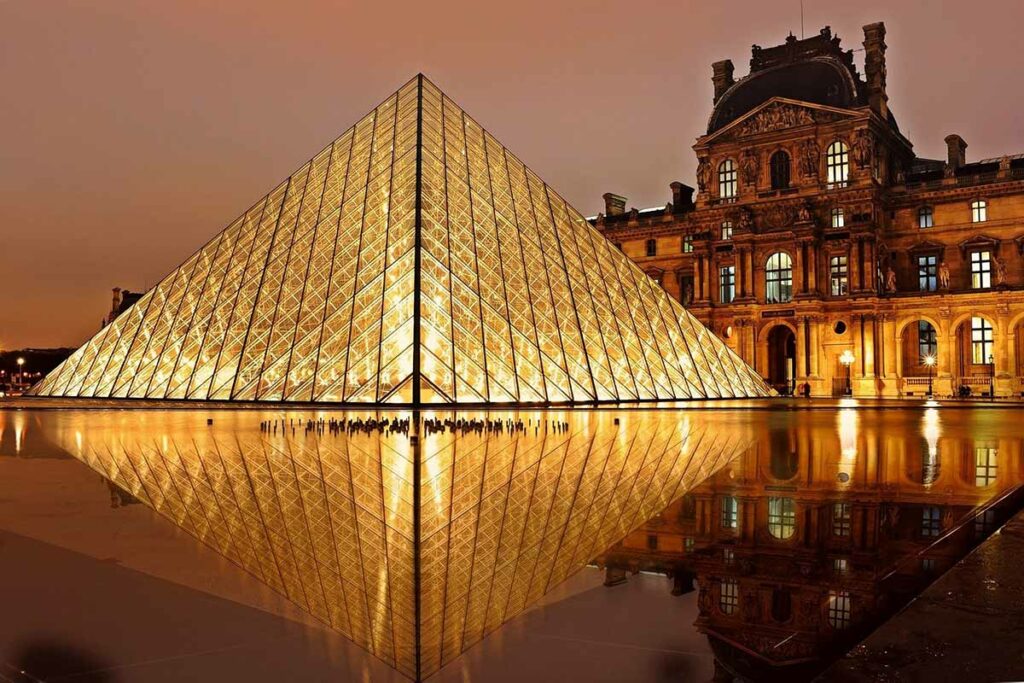
Your tour starts today with a visit to the Louvre, home to some of the World’s most precious artworks, in particular, the Mona Lisa and Venus de Milo.
This stunning building is also home to over 35,000 works of art. Not only is the Louvre the most visited museum in the world, but it is also the largest museum, with galleries spanning 15 acres! In fact, if you were to spend 30 seconds looking at each piece of art housed in the museum, it would take over 100 days, and so your guide will work with you to ensure you see all the artwork on your bucket list.
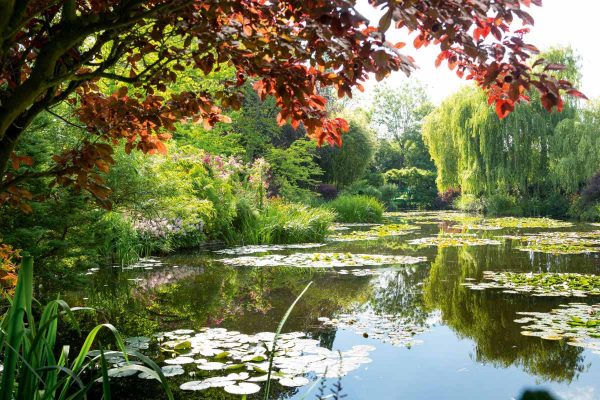
Next, visit the Orangerie museum, home to Monet’s incredible Water Lilies, and a permanent exhibition featuring art by Cezanne, Modigliani, and Picasso, among others. The museum is located in the Tuileries garden, close to the Louvre, where you can enjoy a stroll along the banks of the Seine after your private tour.
Day 3 – Normandy Remembrance: D-Day Beaches & WWII History
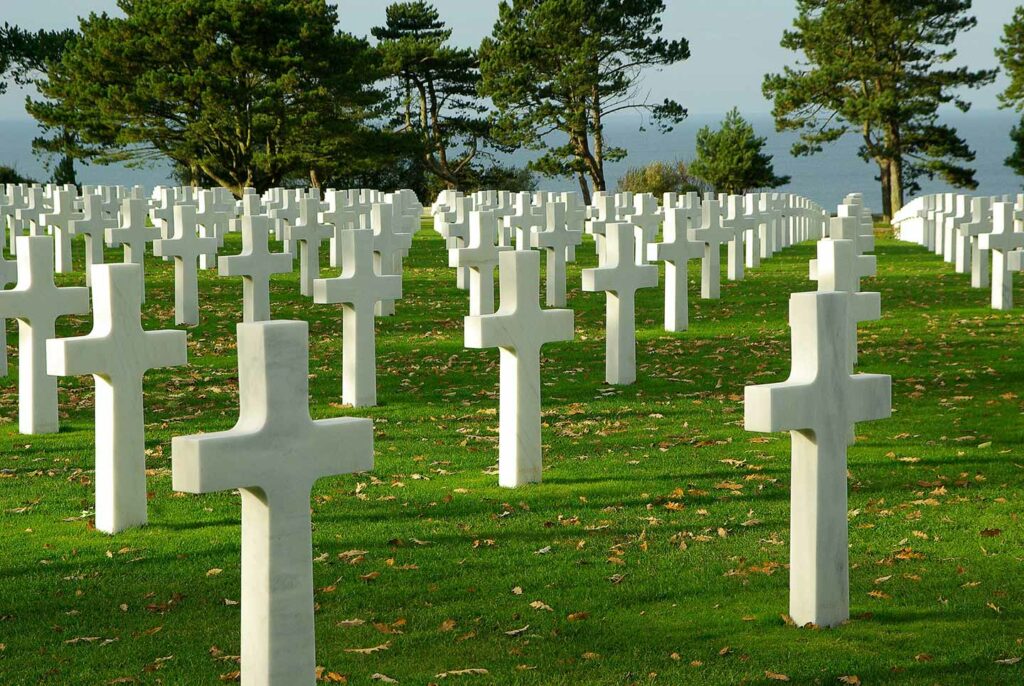
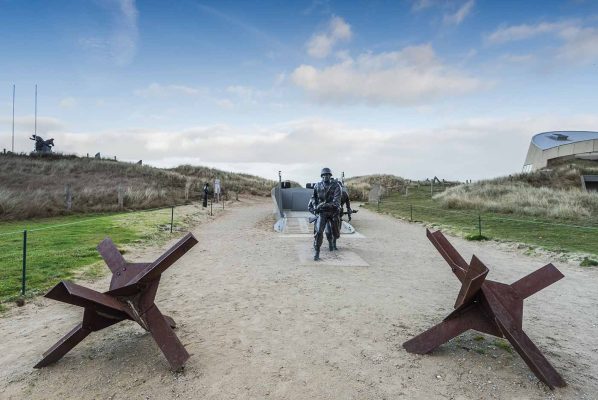
Today you will be taken on a private tour of the D-Day landing beaches to see where this historic battle was fought and then visit the American National Cemetery, where you can pay your respects to the thousands of US servicemen and women who lost their lives for the sake of our freedom.
Visit Sainte Mere Eglise and see where the first paratroopers arrived to liberate the town – today there is a monument of a paratrooper hanging in the back of the main town church to commemorate this historic event. In the afternoon, we will tour the Airborne Museum, dedicated to the 82nd American Airborne Division, before heading back to Paris.
Day 4 – Fairytale France: Château de Chantilly & Great Stables
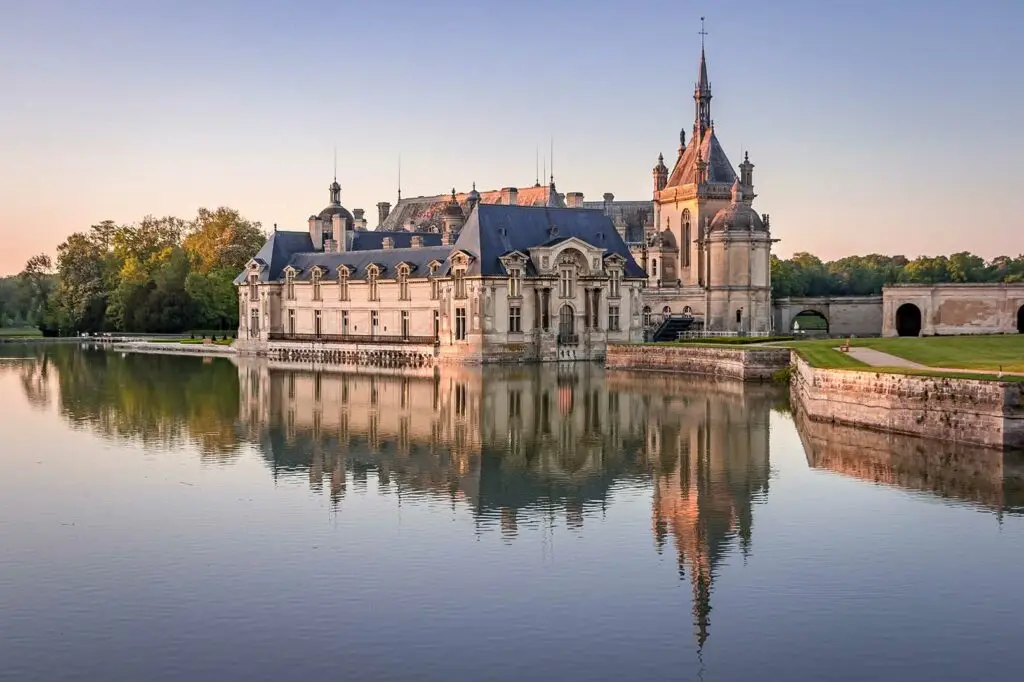
Your chauffeur will be waiting for you to take you to spend the day in Chantilly, famous for lace, its castle, and cream!
The Château de Chantilly is picture-postcard-perfect, with a fairy-tale castle set in its own moat (lake), surrounded by acres of formal gardens. The chateau has a very chequered history, both throughout Mediaeval times and later during the revolution when it was looted and eventually repossessed by an English private bank until the mid-1870s when Henri d’Orleans restored the chateau to its original glory.
This beautiful chateau was also the setting for much of the James Bond film ‘A View to A Kill’ as well as the setting for many periods of French dramas.
Inside the chateau is the Condé Museum, which, after the Louvre, is the most impressive art gallery in France, exhibiting over 1,000 paintings, 2,500 drawings, and 2,500 engravings.
There is also a unique collection of rare and precious books in the chateau’s magnificent library – at last count, over 30,000. One of the most valuable medieval manuscripts in Europe is housed here: The Very Rich Hours of the Duke of Berry (the original is not on display; however, a copy is available for viewing behind a glass display cabinet).
Your tour will also take in the Gallery Psyche, a gallery of stained-glass panels depicting a 2nd-century love story about Psyche, a princess more beautiful than Aphrodite and Cupid, as well as the Great Apartments and the Prince’s bedroom, which has panels dating back to 1720.
Take a look at the Grande Singerie – a unique room decorated with murals depicting monkeys in various scenes. Following your tour inside the chateau, lunch at the restaurant situated in the Anglo-Chinese gardens, complete with authentic English thatched cottages (think Anne Hathaway’s cottage in Stratford-upon-Avon!), before a private tour of the formal gardens of the chateau.
The most unusual feature of the gardens is the large number of water features. Instead of a moat, the castle has lakes to the front and rear, and the gardens themselves also incorporate large pond areas in the English-style garden.
We end our trip to Chantilly with a visit to the Great Stables. This magnificent stable building could easily be mistaken for a chateau or an equally important building, given its grandeur and scale. Built by Jean Aubery for the 7th Prince of Conde in 1719 (although construction was not completed until 1735), it is now home to the Museum of the Horse, which charts man’s relationship with horses since the start of civilisation.
After a busy day exploring Chantilly, relax in the back of your air-conditioned vehicle and let your chauffeur take you back to your hotel in Paris.
Day 5 – Royal Grandeur: Palace of Versailles & Its Gardens
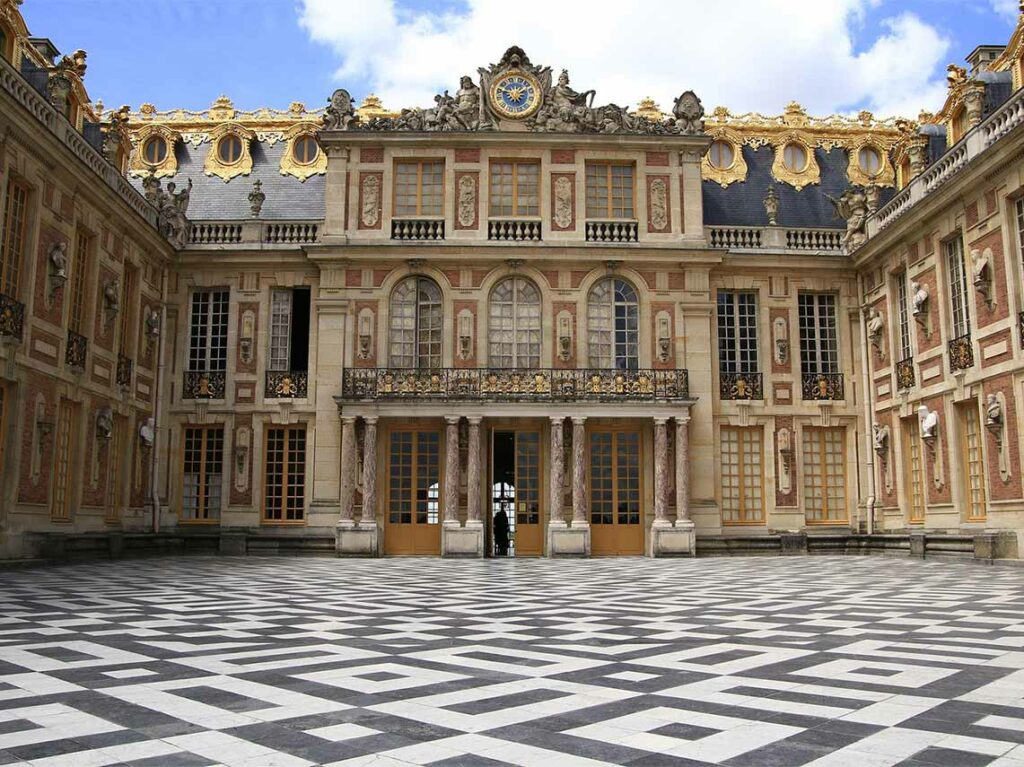
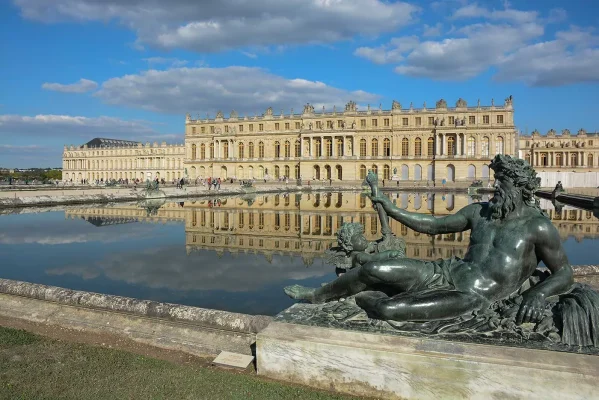
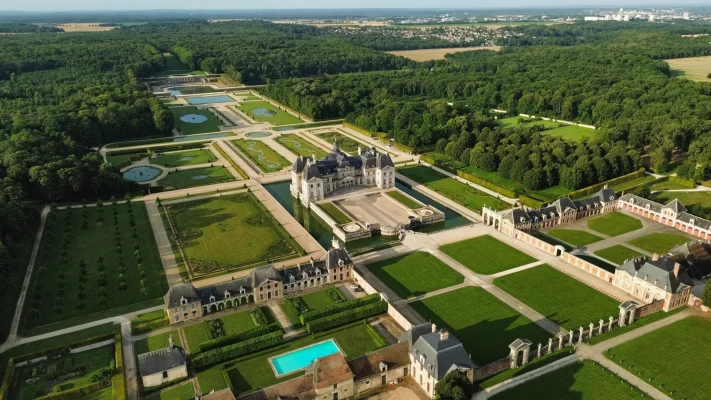
Escape the bustle of Paris today and head out to Versailles, the most opulent of all French châteaux, where your private guide will accompany you on your visit to the Château, its gardens, and finally a stop in Versailles town centre.
Louis XIV created this magnificent chateau as a demonstration of not only his personal wealth and power, but also to show the world French architecture and opulence.
Probably the most famous room in the châteaux is the Galerie des Glaces (Hall of Mirrors), which features over 350 specially commissioned mirrors lining the impressive room. Every part of the chateau was constructed using only French materials and workers who worked day and night to create this architectural masterpiece.
Following your tour of the chateaux, you will then take a private garden tour to explore the extravagant grounds surrounding Versailles. The gardens took over 40 years to complete and comprise 50 elaborate fountains decorated with sculptures of gilded lead or metal portraying characters from Greco-Roman mythology.
Spend the afternoon visiting the famous indoor and outdoor food markets situated in the heart of Versailles, where you can sample artisanal French produce from around the country – from Jambon de Bayonne to truffle-infused Roquefort to hand-made chocolate from the finest Parisian chocolatiers. This market has it all!
Day 6 – Burgundy’s Northern Vines: Grand Cru Chablis

This morning, your driver will be waiting for you in reception, ready to start your 3 days of touring in Burgundy, located in the east-central part of France, and home to some of the world’s best-known wines.
This wine region has five key growing areas: Chablis, Côte de Beaune, Côte Chalonnaise, Côte des Nuits and Macconais and has been a wine-producing region since 854 when local monks first arrived in the region.
Famous for lean, unoaked Chardonnay, Chablis is the northernmost growing region and is geographically set apart from the rest of Burgundy. The dominant soil here is called “Kimmeridgian” limestone, just like in Champagne. Its white, chalky texture is excellent at retaining and reflecting the warmth of the sun, sorely needed this far north, which also helps the grapes ripen.
Today we visit a Grand Cru winery, where you will tour the vines with the vigneron (vintner) before returning to the winery for a private cellar tour, followed by tastings and a formal lunch.
In the afternoon, explore the pretty town of Chablis with beautiful Mediaeval half-timbered houses and charming wine shops and restaurants.
Day 7 – Medieval Majesty: Dijon’s Dukes, Mustard & Gothic Treasures

This morning, your driver-guide takes you to the historic capital city of Burgundy – Dijon, home of the renowned French mustard and the birthplace of the creator of the most famous monument in the world – Gustave Eiffel.
It is also the city where the then-mayor of Dijon, Canon Felix Kir, invented the famous cocktails Kir and Kir Royale.
Dijon is also famous for having the most original buildings over 300 years old or more across the whole of France, and on today’s tour, you will see impressive architectural buildings from Medieval to Renaissance to Art Deco and Art Nouveau, all in the same city.
In the Middle Ages, the Dukes of Burgundy were almost as important as the Kings of France and were almost an independent state within France. The city centre of Dijon is a UNESCO World Heritage Site. We start our tour here at the Palace of the Dukes of Burgundy which now houses a museum charting the development of Burgundy as well as a museum of fine art, considered one of the finest in France outside Paris, which has an impressive collection of art from the Middle Ages through to the late 19th Century including works by Titian, De Latour, Delacroix, Monet, Manet, and Sisley.
When you have finished touring this impressive building, we head towards Rue de la Verriere, a stunning Medieval cobbled street lined with overhanging half-timbered houses.
Lunch in one of the pretty brasseries located in the city center and sample local delicacies such as coq au vin or Boeuf Bourguignon, all served with the obligatory Dijon mustard.
In the afternoon we head to Notre Dame, a 13th Century Gothic masterpiece in the city center famed for the unusual Western facade which consists of 3 superimposed rows of arches, decorated with over (albeit fake) 50 gargoyles as well as the impressive automated clock that was shipped over from Belgium in the late 1780s, how the automation changed over the years and now depicts four figures rather than the single man on the original automation.
In the evening, have ‘aperos’ (this is what the French call pre-dinner drinks) and learn the story about how Kir originated here.
Day 8 – Burgundy Whites & Reds: Meursault & Beaune Wine Estates
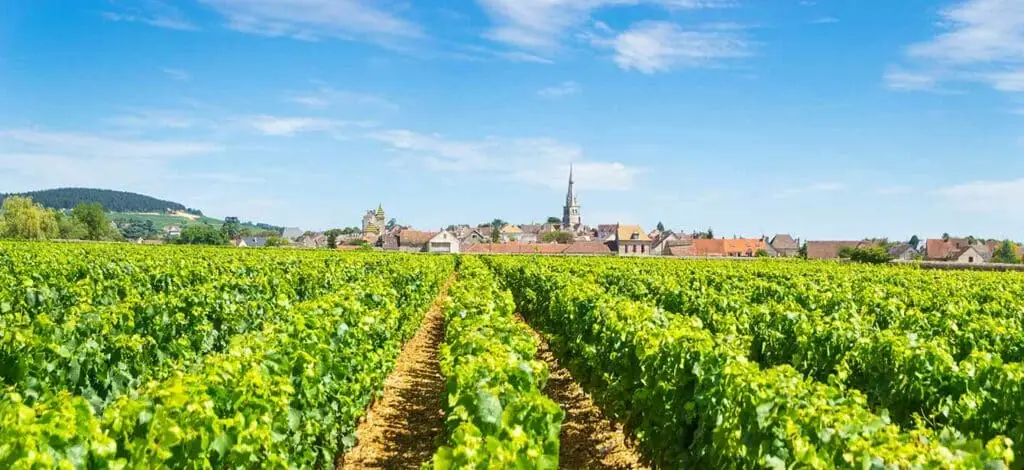
No visit to Burgundy would be complete without tasting the wine this region is so famous for.
Today, we start with a drive to Meursault, mainly renowned for its white wines, but it also produces reds. The white grape variety is Chardonnay, while the reds are made from Pinot Noir. This tiny appellation is a 2 KM square and produces undoubtedly some of the world’s best wine.
We start the day with a private tasting and a tour of the chateau, which is named after this wine. This is unusual for the region, unlike in Bordeaux, there are much fewer wine châteaux. Our visit today includes a private tour of the castle and grounds with the head sommelier, who will teach us why this tiny region of France is home to such a vast array of exceptional wines.
Your tastings will include wines featured at 3* Michelin restaurants and your sommelier can arrange a shipment of bottles so that you can savor the delicious Meursault when you get home.
In the afternoon, we head to Beaune and visit a local winery. Your tour will include at least six tastings of local award-winning Burgundy wines.
Day 9 – Lyon Through the Ages: Old Town, Cathedral & Roman Roots
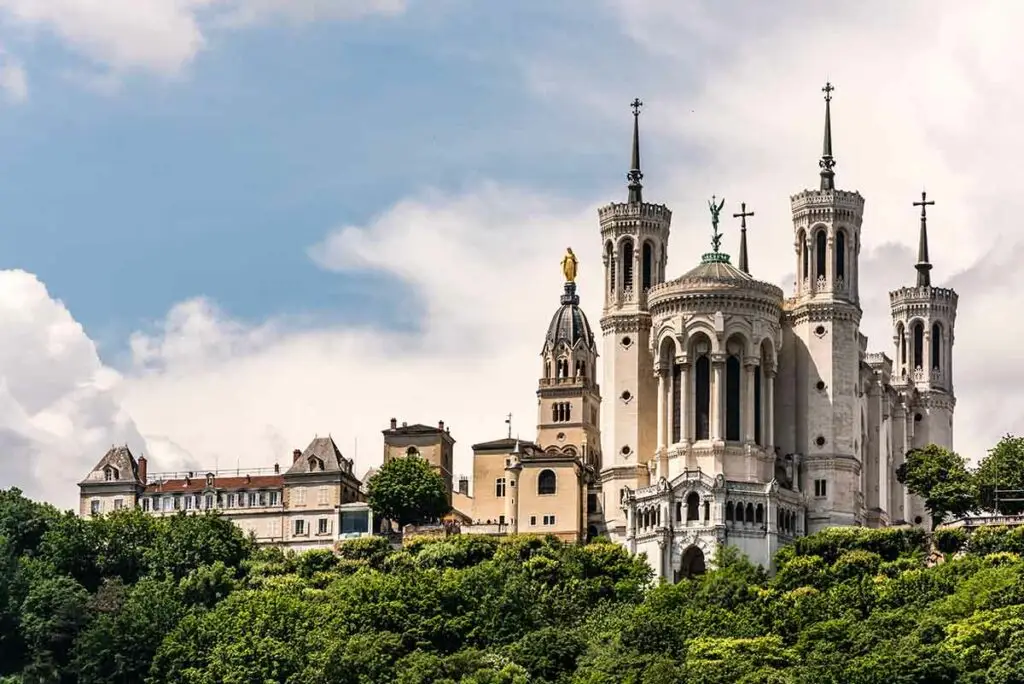
Lyon is France’s 3rd city and has been an important city across the ages from Roman times through to today. During World War II Lyon was the command center for the South of France as well as home to the Gestapo. Ironically, Lyon was also a stronghold of the Resistance during this period, with many freedom fighters using the city’s secret underground tunnels to move about.
Spend the afternoon in the Vieux Ville and explore the magnificent cathedral, which features both Romanesque and Gothic architecture. The cathedral of Saint Jean took almost 300 years to complete and is famous for its amazing lamb’s-rose stained-glass windows, created in the 12th Century. Enter through the massive oak doors and marvel at the incredible 16th-century astrological clock, which features automata of animals and people.
Your guide will take you on a private tour of this wonderful building before visiting the archaeological gardens adjacent to it, which contain remnants of a 4th-century church that was originally built on this site.
Finish the day in one of the bustling bars in the piazza and watch the world go round.
Day 10 – Flavours of Lyon: Markets, Wine Estates & Michelin Dining
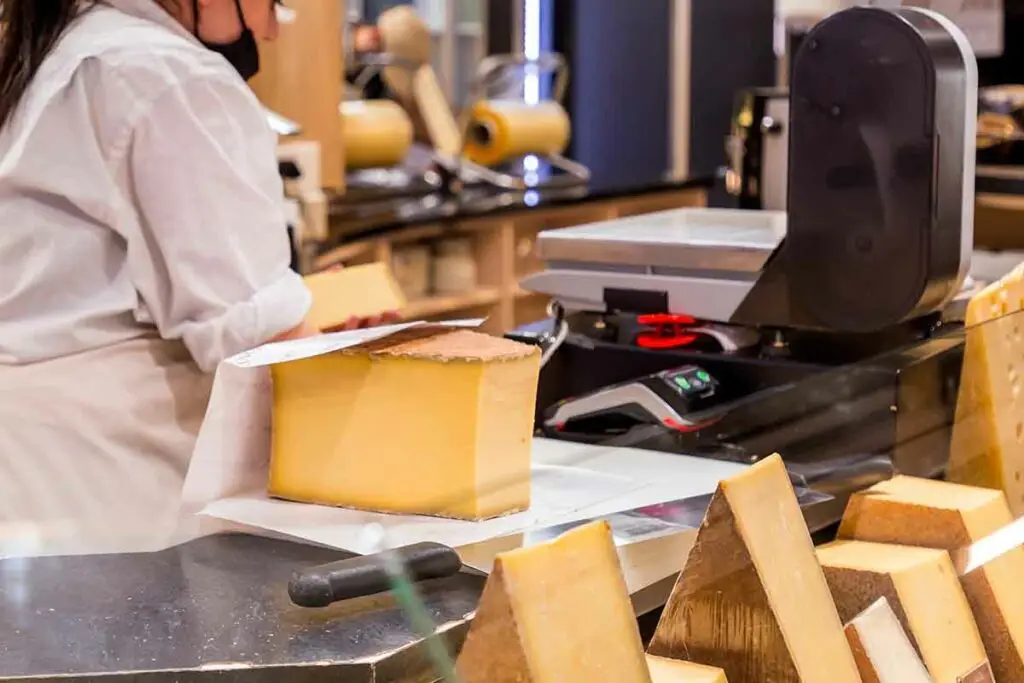
We spend today exploring Lyon and its gastronomic heritage. Since 1935 Lyon has been recognized as the gastronomic capital of the world and today it has over 4,000 restaurants, of which 20 have one or more Michelin stars.
Your tour starts with a private visit to Les Halles des Lyon, a covered market featuring over 50 artisan farmers and producers. Learn why Lyon is a culinary capital and sample local delicacies paired with wines from the region.
In the afternoon visit, one of the local award-winning wine farms and have a private tour of the estate. Learn from your specialist guide about the wines of the region and what makes this area so perfect for winegrowing, and enjoy private classes on pairing wine and tasting exquisite vintages paired with local cheeses and charcuterie.
In the evening, have dinner at one of the many Michelin-starred restaurants and taste the finest Lyon has to offer.
Day 11 – Swiss Elegance: Geneva’s Old Town & Chocolate Heritage
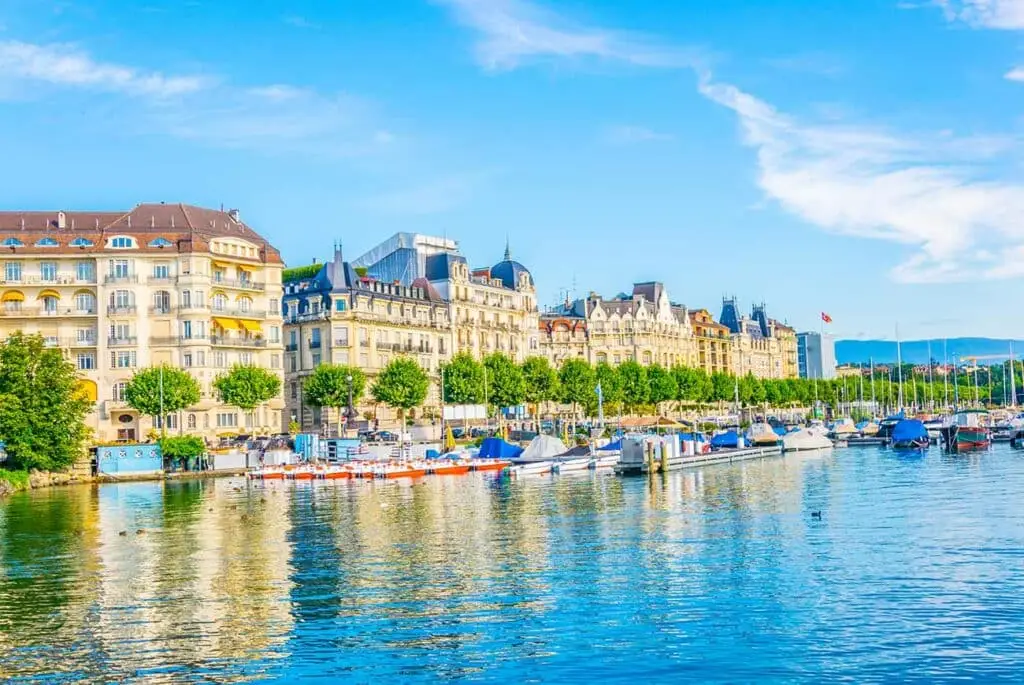
Relax in the back of your luxury car and drive east towards the beautiful city of Geneva, which lies on the shores of the incredible Lac Leman (Lake Geneva) and is surrounded by the Jura Mountains and the Alps.
It is the largest city in the French-speaking part of Switzerland and was the center of the Reformation in the 16th Century led by Jean Cauvin (John Calvin) and was known as the ‘ Protestant Rome.’It was not until the end of the Napoleonic wars that Geneva was made part of Switzerland and since then this city has flourished and is now a global financial banking hub as well as the global center for international diplomacy, with the UN having its headquarters here.
As if these were not enough reasons to visit, Geneva is also globally famed for precision watchmaking and is the home of fine chocolate (although my Belgian and French colleagues would beg to differ here!).
Our tour today will take you through the old town, where you can spend time browsing artisan chocolatiers, admire the beautiful architecture, and stop to look down at the town from the Treille Promenade.
This is the world’s longest wooden bench and runs from one end of the promenade to the other – just over 410 feet! Our tour will also take in the famous Jet d’Eau, an iconic landmark in the city, with 130 gallons of water forced into the air to a height of 450 feet, visible even from 30,000 feet.
In the afternoon, we have a tour of an award-winning chocolatier, a chocolate workshop, and learn how to temper chocolate and make a ganache. Your class will also include chocolate tasting, and, as with everything Gallic, a wine pairing to show which wines work best with each chocolate type.
We end the day with a drive around the city, taking in the UN building and the poignant Broken Chair sculpture – a 40-foot-high sculpture installed to commemorate the Ottawa Treaty.
Day 12 – Alpine Wonders: Chamonix, Mont Blanc Views & Annecy Canals
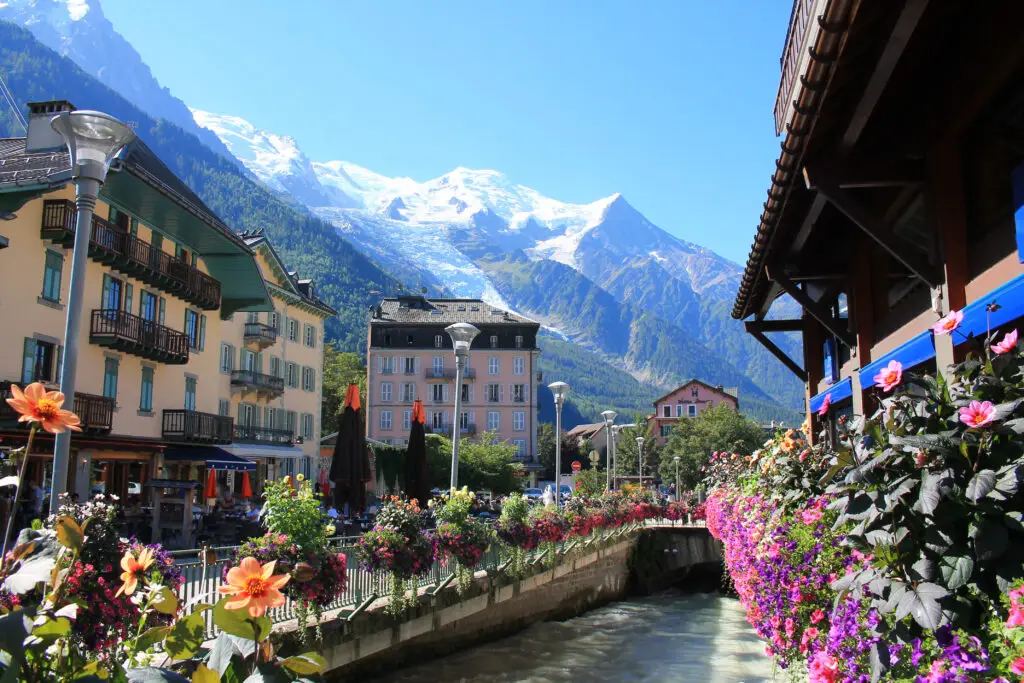
Today, we head into the Alps and to the home of the highest mountain in Europe west of Russia, namely Mont Blanc.
Chamonix is primarily known as a winter ski resort; in fact, the first Olympic Winter Games were held here in 1924. Things have changed over the decades, and even in summer, Chamonix is a thriving, busy town.
We head first to the famous Aiguilles des Midi, one of the world’s highest (and steepest) cable cars, which takes only 20 minutes to reach its destination at 3,842 m. Step out of the cable car and take in the most spectacular views of the Alps and, of course, Mont Blanc. For those of you who are more adventurous, you can step onto a viewing platform, essentially a glass box suspended over the mountain face.
Lunch at one of the pretty restaurants in the town square, sample local delicacies such as raclette or tartiflette, and try a glass of local Savoie wine.
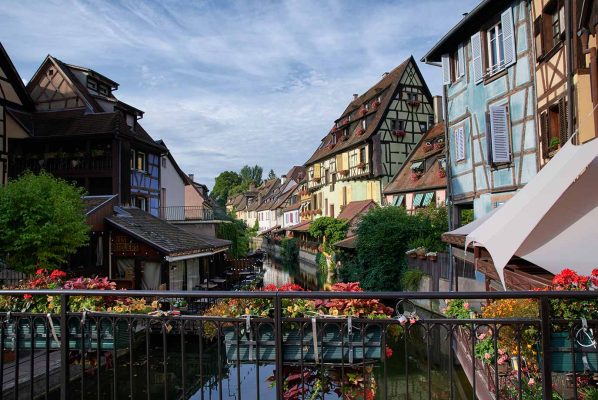
On the way back to Lyon, we stop in Annecy, one of the most beautiful towns in France, nestled on the shores of Lake Annecy and surrounded by snow-capped mountains. The old town is picture perfect, with cobbled, narrow streets and brightly colored houses lining the canals of this pretty town. Your guide will then lead you through the old town lined with art galleries, artisanal craft shops, and local delicatessens.
Your evening starts when we arrive back in Lyon, and your chauffeur takes you for your elegant private dinner cruise on the Rhone.
Day 13 – Riviera Gateway: Menton’s Old Town & Cocteau’s Legacy
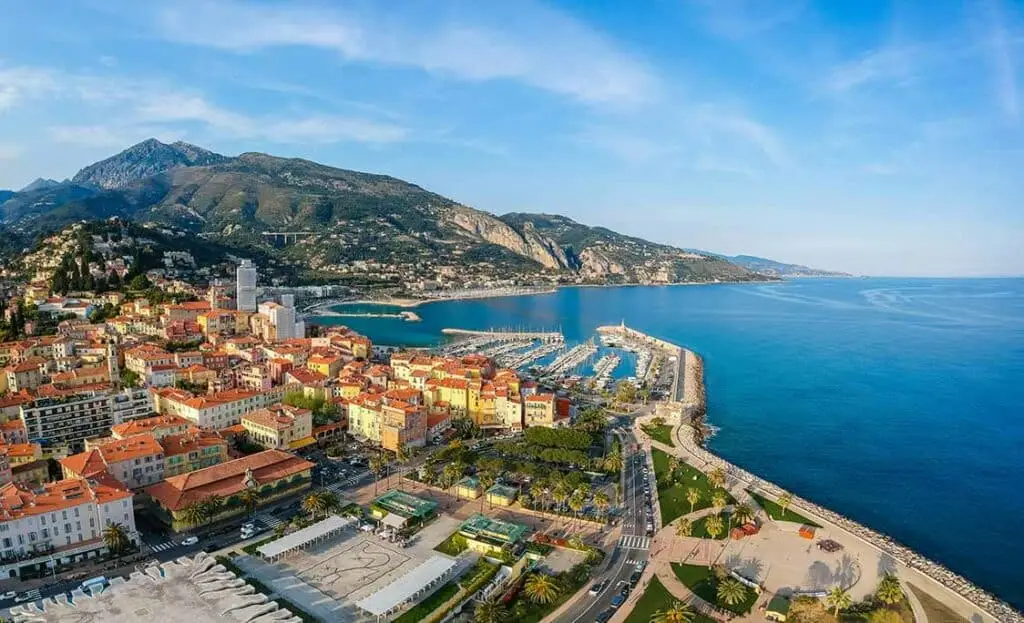
Menton, known as the Pearl of France, is located on the border with the Italian Riviera and Monaco, home to the rich (or rather, very rich) and famous.
Menton is the starting point for our tour of Provence and the gateway to the exclusive French Riviera. As with many frontier towns, Menton was only officially made part of France in 1861, when Napoleon bought it from the Grimaldi family. It has also been occupied by both Italy and Germany, and was liberated after WWII by Canadian and American troops as part of the First Special Service Force on 8 September 1944.
Menton’s famous climate – it has an impressive 316 days of sunshine every year, making it perfect for citrus growing, and every February, there is a lemon festival – think Mardi Gras with citrus fruits!
At the famous indoor market, we start the day in the old town, which is a mix of pastel-colored houses, interspersed with grand villas and refined baroque buildings and narrow cobbled streets and pavements leading to the Basilica Saint Michel Archange. This impressive 17th-century cathedral underwent a Baroque makeover in the early 19th Century.
Lunch in one of the harbor restaurants, and make sure to try local specialties such as pichade and tarte au citron de Menton.
After lunch, we will have a private tour of the Cocteau Museum, which features over 1000 of his works. Cocteau was made an honorary citizen of Menton and worked with the then-mayor to design the museum, which he continued to work on until his death in 1966.
In the evening, dine at one of the elegant fine dining spots by the seafront.
Day 14 – Royals & Riviera: Monaco Palace, Rose Gardens & Monte Carlo
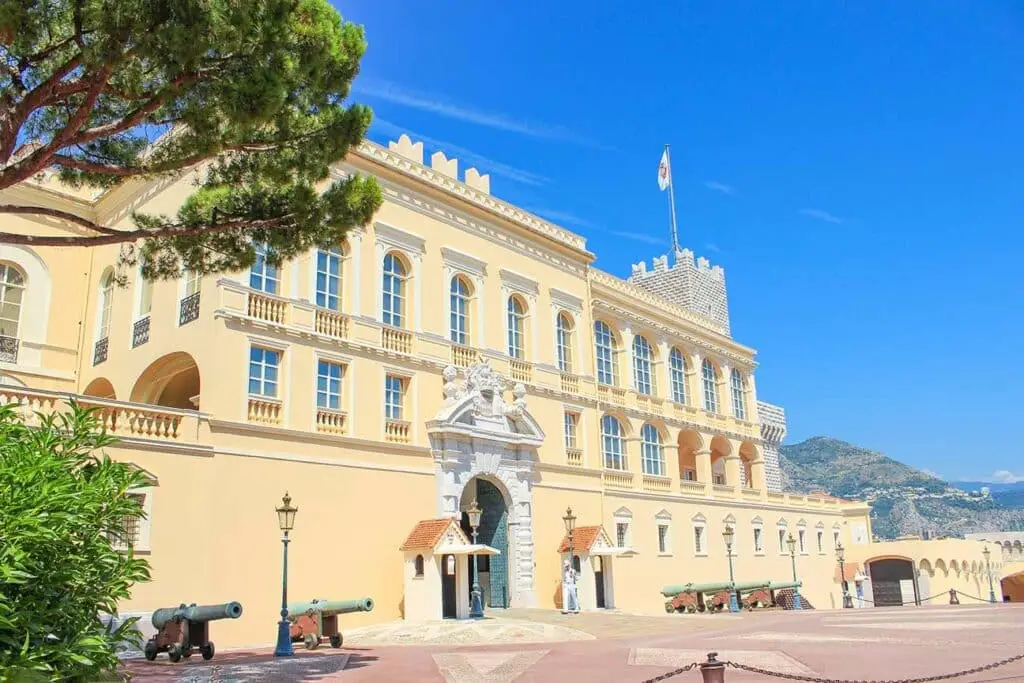
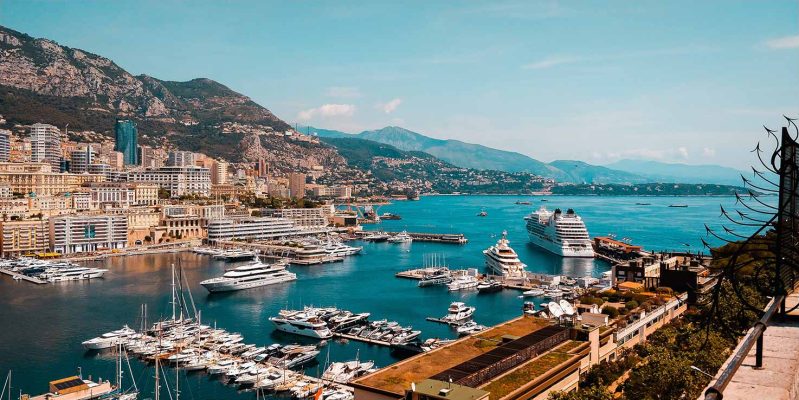
Our next stop is the glamorous principality of Monaco, the world’s 2nd-smallest country, only the Vatican is smaller.
When people think of Monaco, they usually think of Monte Carlo, the casino, and expensive mega yachts. In fact, there is so much more to see in Monaco.
Today we head off to the Palais du Prince for a private tour of the Prince’s castle (NB the tour is not available if the Prince is in residence). The Palace overlooks Monaco below and has stunning views across the Mediterranean. It was initially constructed as a Genoese fortress but is now home to the Prince and his family. Your private tour will include a look at the Throne room, the private chapel, and the famous Blue room, known for its opulent gold and blue decor.
Following your tour of the Palace, we will then visit the famous Princess Grace Rose gardens, created by Prince Rainier III to honor the memory of his wife, Princess Grace.
This amazing rose garden has over 300 varieties of roses and over 8,000 rose bushes, all adorning this English-style garden dedicated to the late Grace Kelly.
Next, we head over to the Musée Océanographique, situated nearly 100 meters above sea level. This giant structure took over 11 years to build the foundations, ensuring the building would be secure. Opened in 1910, it is one of the world’s oldest aquariums and now comprises a Mediterranean aquarium, a Tropical aquarium, and a shark lagoon, with over 6000 marine creatures and over 100 different pools.
We end the day in Monte Carlo and take a trip to probably the most famous casino in the world. Inside, admire the enormous crystal chandeliers, the original priceless artworks that adorn the walls, and the majestic Onyx columns that welcome you to the gaming rooms. Said to be the inspiration behind the James Bond film Casino Royale, maybe try your luck at one of the tables or just people-watch at this most iconic casino.
Day 15 – Belle Époque Nice: Markets, Cathedrals & Chagall Masterpieces
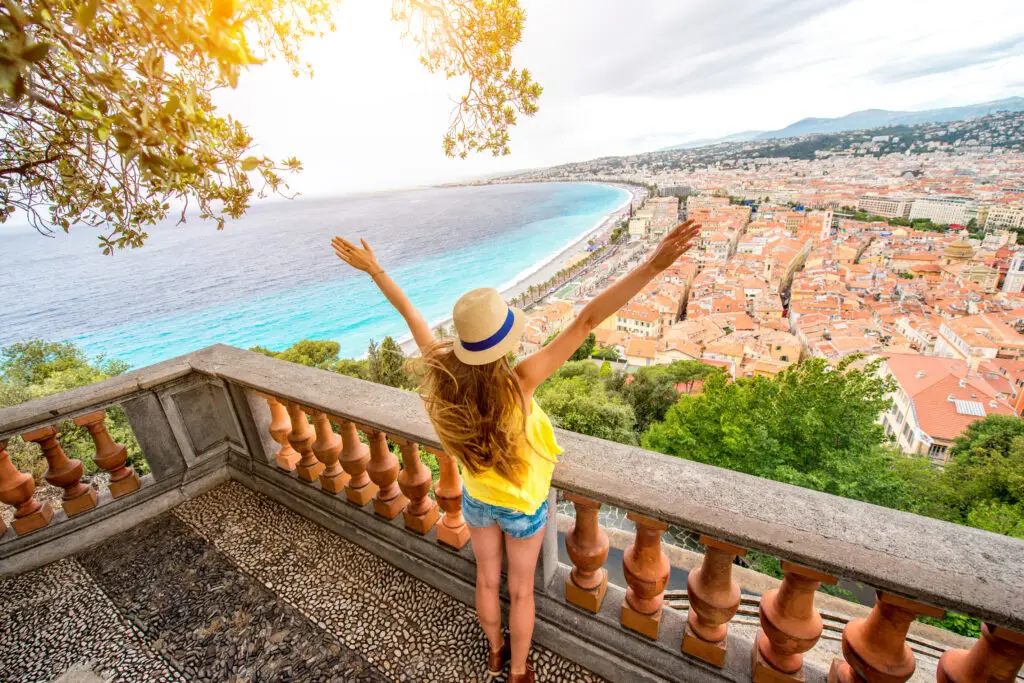
Nice was originally named after the Greek Goddess Nike, and so was possibly the original Nike Town! Nice was an Italian city until relatively recently (1860) when the Italians gave the City to France as recognition of French support in helping the Italians against the Austrians. The strong Italian influence is evident throughout the city, and many locals speak both French and Italian.
It is not just French and Italian influences that can be seen in this city. At noon every day, a cannon is fired across the city. This tradition was, in fact, started by an Englishman in 1860.
Sir Thomas used to get very frustrated that his wife could not serve the midday meal at noon, so he requested that the mayor have a cannon fired every day at noon, and he would cover the cost. When Sir Thomas moved back to the UK, the locals, having grown so used to managing their time with the aid of the midday cannon, petitioned for the cannon shot to continue at noon. To this day, a cannon is fired every day at noon in Nice!
We start the tour in the old town, which is a myriad of winding, narrow streets leading to gilded, shaded squares with little bistros and cafes.
Your private tour will also include visits to the magnificent Opera House, the Town Hall, and Rossetti Square, home to Nice Cathedral. The Cathedral is unlike many French Cathedrals: relatively modest from the outside, but once inside, admire the lavish Baroque designs, gilded, ornate chapels, sculptures, and paintings, all with a distinctly Italian feel.
Stop for lunch in the famous flower and produce market, which is also in the old town.
The afternoon begins with a private tour of the Musée Marc Chagall. Chagall’s influence was not limited to the paintings and exhibitions in this building; he also determined how the building should be constructed based on where he wanted his works displayed. Among the 17 works by Chagall, the exhibition also houses the famous Resistance, Resurrection, Liberation triptych, painted before, during, and after the Second World War.
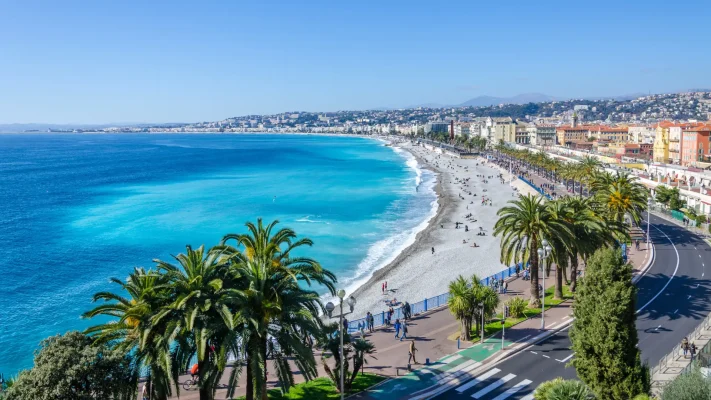
End the day with a walk along the famous Promenade des Anglais – so named after the high society English tourists that visited Nice, including Queen Victoria and Winston Churchill.
Day 16 – Cinematic Cannes: Le Suquet, Markets & the Croisette
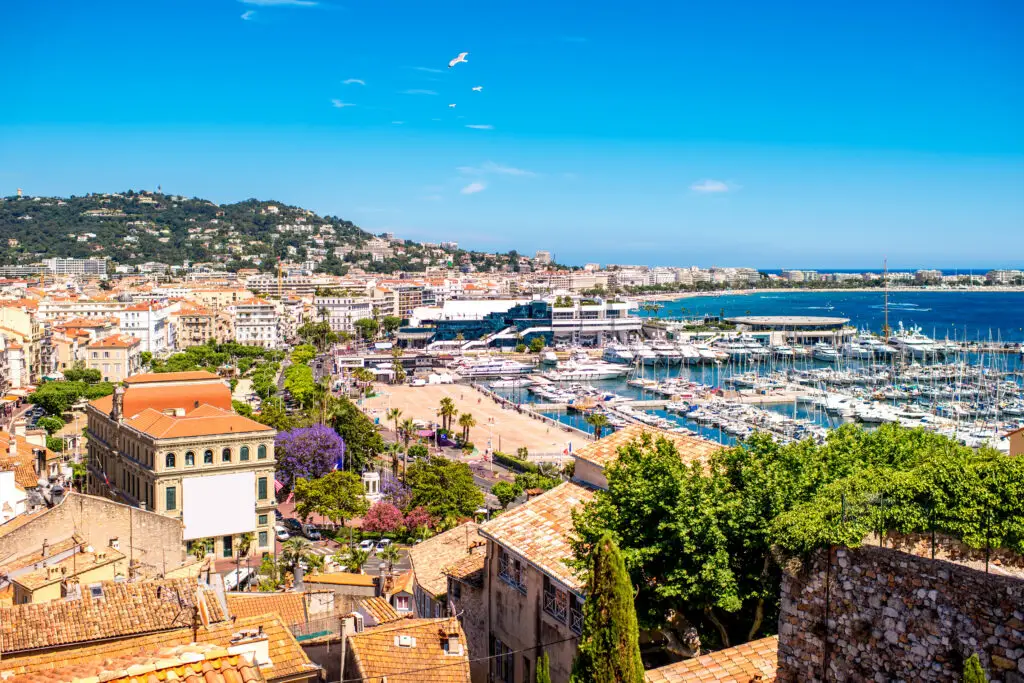
Known as the Beverly Hills of the Riviera, Cannes is an elegant coastal city located just west of Nice. The stunning beachside city became popular in the early 19th Century when Lord Brougham, an important British statesman who was also Lord Chancellor discovered the city and really helped make it a resort for the upper classes of British society- there is a giant bronze statue in his memory right in the city center to celebrate the importance of this man(he also was instrumental in banning slavery in the UK)
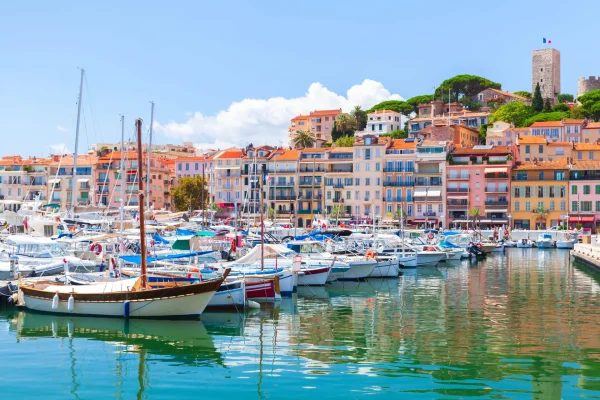
Today, it is like many other cities along the Med and is home to the rich and famous, and not just whilst the festival is on. We start your tour of Cannes with a visit to Le Suquet, the original Roman hillside settlement of Cannes, which is filled with pastel-colored houses and cottages and narrow cobbled streets, and stop for refreshments in one of the many hillside cafes that overlook the Bay of Cannes.
Next, we head to the indoor market, Marché Forville, filled with local farmers and artisan food producers. Sample some local organic olives or freshly caught oysters, and for those of you with a sweet tooth, sample handmade, elegant chocolate creations or locally made macaroons.
Enjoy Lunch in one of the traditional brasseries outside the market.
In the afternoon, head to the Grand Auditorium for a private tour. Your driver-guide will even take a photograph of you on the famous red-carpeted steps outside the building. Later stroll along the iconic La Promenade de Croisette, this famous beachside road is lined with the world’s most famous luxury brands and five and 6-star luxury hotels with Michelin * restaurants. This promenade runs the whole length of the seafront, an incredible 1.6 Km.
This evening, dine with the rich and famous at one of the many fine dining restaurants.
Day 17 – Perfumed Hills: Grasse Workshops, Museums & Olive Oil Estates

The perfume capital of the world is widely recognized to be Grasse, a beautiful town nestled in the hills above Cannes. Over 2/3 of France’s perfume is manufactured here in Grasse.
We start with a perfume workshop where you will learn the basics of perfume-making from a ‘nez’ and create your own perfume. We then visit the incredible Musée International de la Parfumerie, which charts the development of the industry and its importance in French culture, and features a stunning selection of antique crystal perfume bottles.
Our next stop is the 12th-century cathedral in the old town. Although the building seems quite plain from the outside, once inside, the opulence is incredible and includes three paintings by Rubens, the famous Belgian artist.
Enjoy lunch in one of the many pretty bistros. Most of the town’s squares have plenty of great bars and restaurants.
In the afternoon, we visit one of the local award-winning olive oil farms for a private tour of the estate and learn why the climate in Grasse is perfect for producing excellent olive oil. Your tour will also include tastings of local bread and charcuterie.
Day 18 – Cassis Coastlines: Calanques Cliffs, Harbour Strolls & Provençal Flavours

Your private driver-guide collects you in a luxury vehicle and brings you to the charming seaside town of Cassis. Tucked between dramatic limestone cliffs and the deep blue Mediterranean, Cassis feels relaxed, colourful, and effortlessly elegant.
Start the day with a leisurely walk around the harbour, where fishing boats bob alongside sleek yachts. Next, experience the highlight of Cassis: the Calanques. These striking white limestone inlets, carved into the cliffs and filled with turquoise water, are among the most beautiful coastal landscapes in southern France.
Depending on your preference, enjoy a private or small-group boat cruise to admire the Calanques from the water, or opt for a scenic walk along the coastal trails for panoramic views back toward Cassis and the Mediterranean.
In the afternoon, head just outside town to the Cassis wine appellation, one of the oldest in France and best known for crisp whites and elegant rosés. Visit a local vineyard to learn about the unique terroir shaped by sea breezes and limestone soils, followed by a guided tasting in a peaceful vineyard setting, a perfect way to close the day.
Day 19 – Maritime Marseille: Basilicas, Bouillabaisse & the Mucem
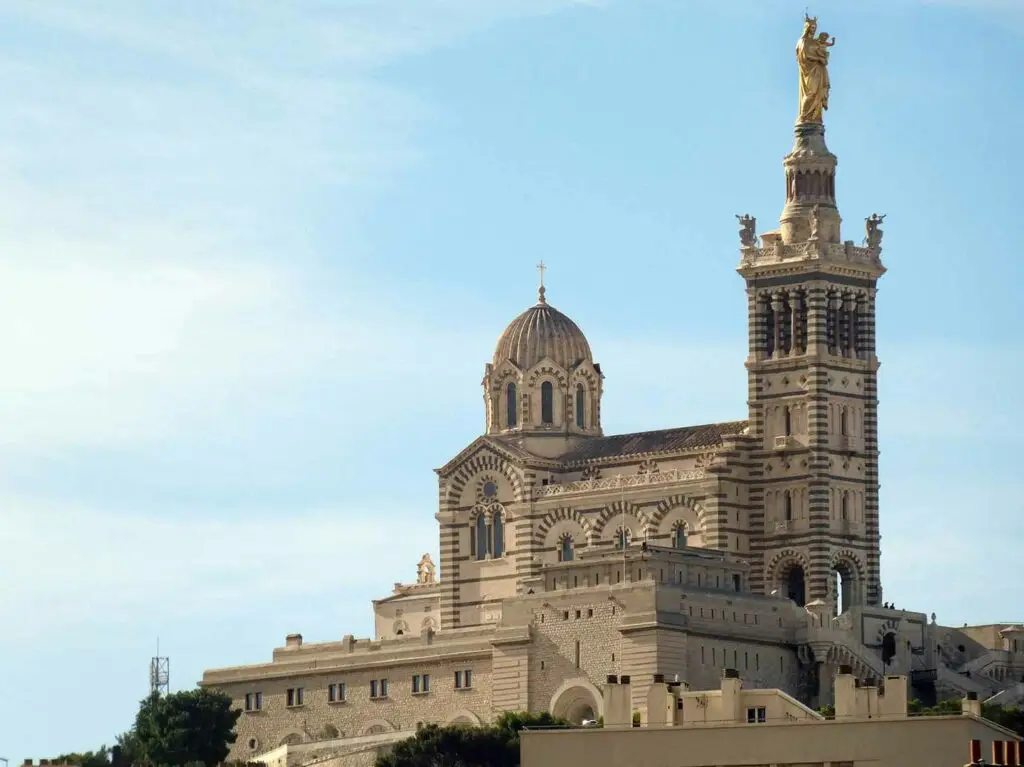
Marseille’s position as a key strategic port dates back to 600 BC, when the Greeks first established the port, and it is steeped in history – even the French National anthem, “La Marseillaise,” is based on Marseille.
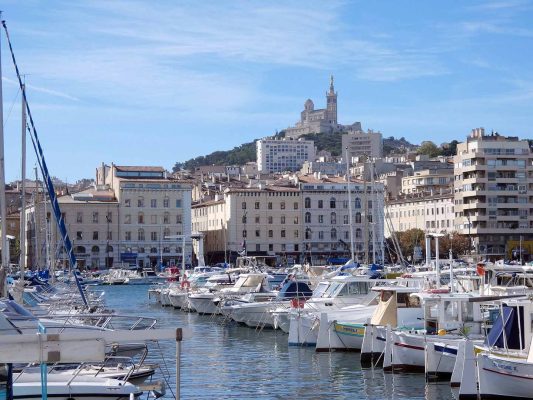
Our tour starts at the Basilica Notre–Dame de la Garde, which was built by King Francois I to protect the city and is the highest building in Marseille, standing at an impressive 490 feet above sea level. On top of the Basilica is a statue of the Virgin Mary, said to protect the city and its inhabitants. For those of you who are less mobile, there is a train from the Vieux-Port that goes directly to this impressive Byzantine monument – from there, admire the view across the city and the Mediterranean.
From there, it is a short walk to the Vieux Port – the real heart of Marseille. This is where locals and tourists mix – sample some delicious Bouillabaisse (a local specialty) with freshly caught seafood at one of the many fish restaurants dotted about the port.
In the afternoon, we have a private tour of the Mucem (Museum of Civilisations of Europe and the Mediterranean) in Marseille, the city’s newest museum. It was opened in 2013 to commemorate Marseille’s recognition as a European City of Culture.
The museum itself is a contemporary design in stark contrast to the historical buildings in the rest of Marseille, and is built on the site of the original Fort of St Jean. There are close to a million exhibits on display that show how civilizations in the Mediterranean and North Africa have developed over the past centuries.
Day 20 – Elegant Aix: Cézanne, Fountains & Saint-Sauveur Cathedral
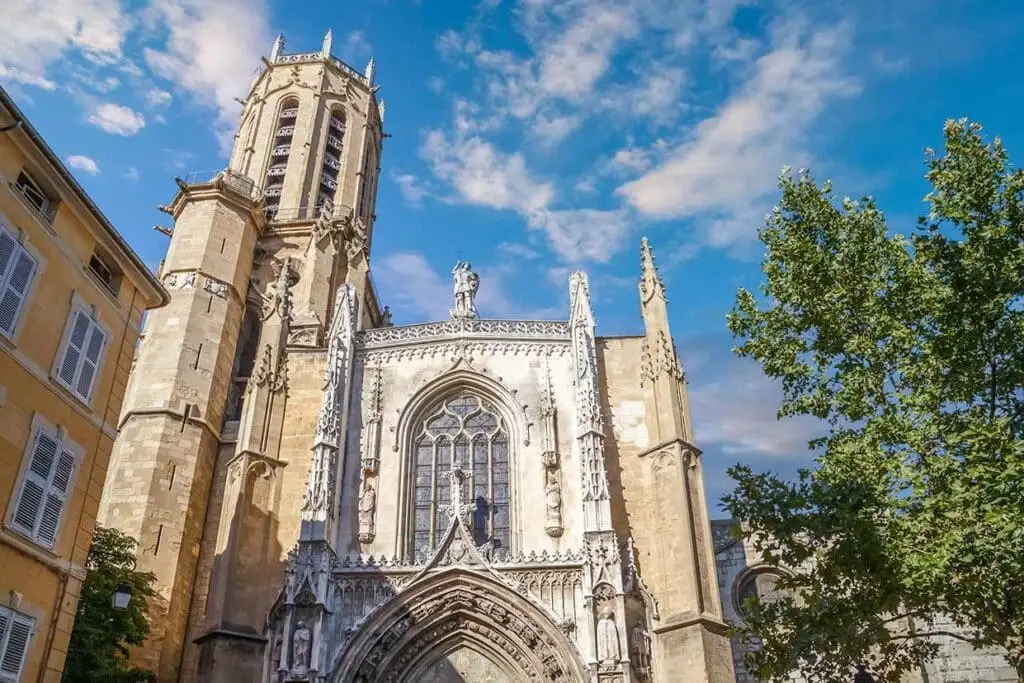
Today, we visit the beautiful and very chic town of Aix-en-Provence, known locally as the 21st arrondissement for its magnificent architecture, wide, leafy boulevards, and fashionable artisan shops and art galleries. It’s also called the ‘la Ville aux mille Fontaines’, which translates to the “City of a Thousand Fountains”. When the fountains were constructed, running water was seen as a sign of wealth, making it an open sign of prosperity in the city.
We start at the Musée Granet, a real museum found outside of Paris. With over 12,000 artworks, including a neoclassical sculpture collection, a pop art expo, and, of course, pieces by possibly the most famous artist who lived here, Paul Cezanne. For lovers of Cezanne, we can also take a tour of his actual workshop, where he created the vast majority of his art, largely untouched over the years; it offers an intimate look into how Cezanne worked.
Next, we head off to Le Cours Mirabeau, a charming boulevard lined with tall Plane trees and the perfect spot for lunch in one of the many cafes and restaurants. After lunch, have a stroll around the local market.
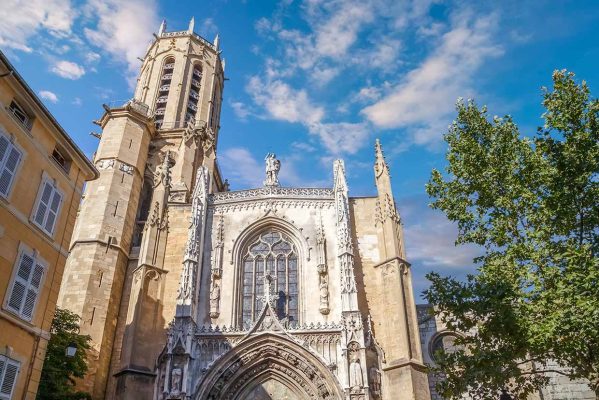
We end our day in Aix-en-Provence with a private tour of the Cathedrale Saint Sauveur d’Aix-en-Provence, an imposing building that began construction in the 12th Century.
The cathedral has undergone many alterations to its construction, and the building was only completed in the 19th Century. The architectural style combines Baroque, Gothic, and Romanesque elements. The imposing walnut doors mark the main entrance, and each side is flanked by three beautiful carved apostles. Additional apostles are represented inside, along with many sculptures and paintings curated over the centuries.
Day 21 – Au Revoir France: Private Departure Transfer
Your chauffeur will be waiting for you at your hotel reception, ready to take you and all your luggage to your next destination.
Relax in the luxurious surroundings of the cool, air-conditioned interior, and let your chauffeur take you in style and comfort to your next holiday adventure.