Day 1: Paris Icons & Highlights
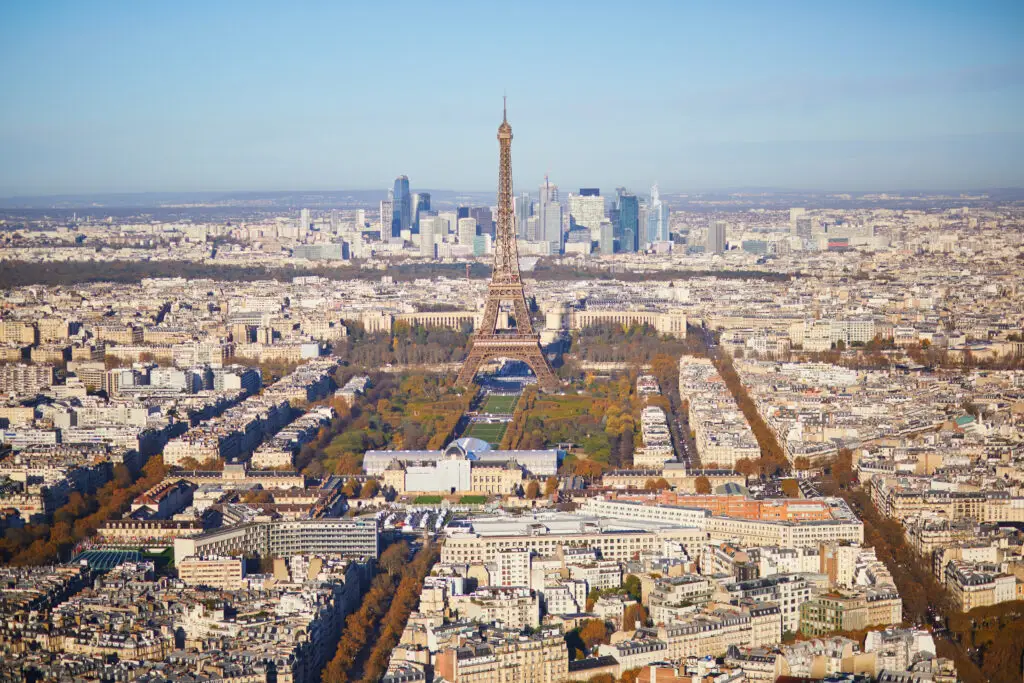
Begin your time in Paris with a comprehensive familiarisation tour.
Your driver-guide will meet you at your hotel and take you on a panoramic introduction to the city’s most important landmarks. This includes Montmartre & Sacré-Cœur, the Champs-Élysées, the Eiffel Tower, Notre-Dame, Place de la Concorde, the Opéra district, the Louvre, and the Arc de Triomphe.
Where possible, you’ll pause for short walks and photographs while your guide explains the architecture, layout, and historical context of each neighbourhood.
Lunch in Montparnasse & Local Market Visit
Stop for a relaxed lunch in one of Montparnasse’s charming squares. Afterwards, browse the nearby market stalls, your guide will point out the seasonal produce, regional ingredients, and everyday staples that define Parisian food culture.

Day 2: Paris – Food, Architecture, & History
Begin with breakfast at a traditional boulangerie, before we make our way to an award-winning fromagerie, charcuterie, and poissonnerie to taste regional cheeses, cured meats, and fresh seafood, while your guide introduces you to Parisian food etiquette and local favourites.
Sainte-Chapelle: Gothic Architecture at Its Finest
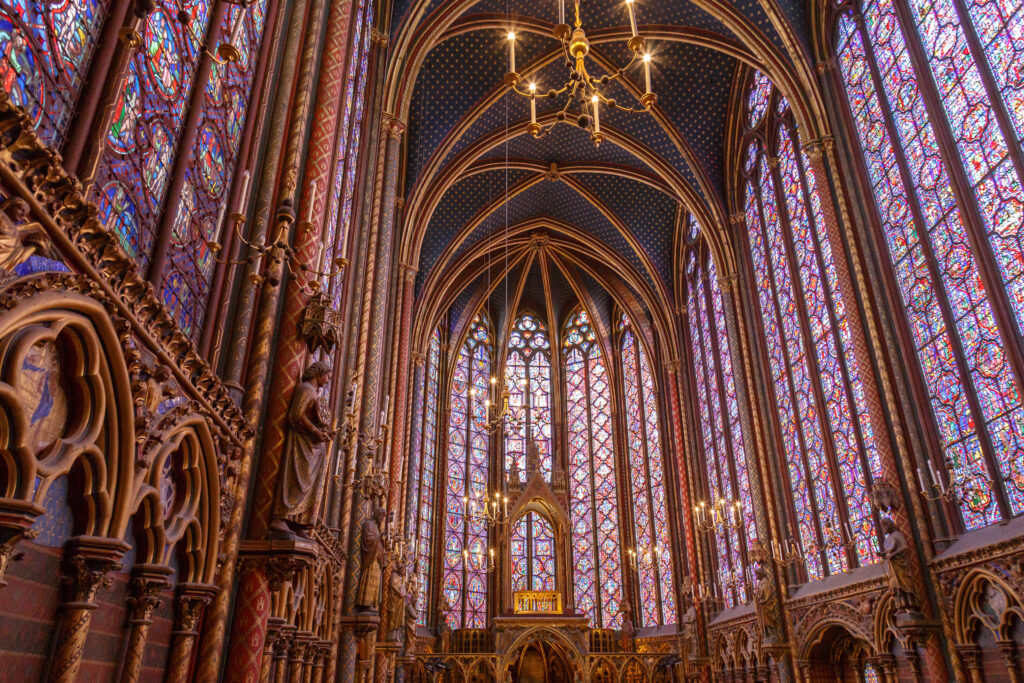
Visit Sainte-Chapelle, a jewel of Gothic architecture commissioned by King Louis IX to house holy relics, including the Crown of Thorns.
Your guide will explain the chapel’s unusually rapid construction, just seven years, and the difference between the Lower Chapel (for palace staff) and the Upper Chapel (for the royal family).
The upper level’s vast stained-glass windows, more than 600 m² of medieval glass, are the highlight of the visit.
Conciergerie: Medieval Paris & the French Revolution
Our last destination of the day is the Conciergerie, once part of the royal palace and later a prison during the French Revolution.
Explore the vaulted medieval halls and learn about its most famous prisoner, Marie Antoinette.
Don’t miss the Tour de l’Horloge, home to Paris’s oldest public clock, installed in 1371.
Day 3: Giverny: Monet’s Home, Gardens & Impressionist Masterpieces

Travel with your driver-guide to the village of Giverny, where Claude Monet lived and painted for over 30 years.
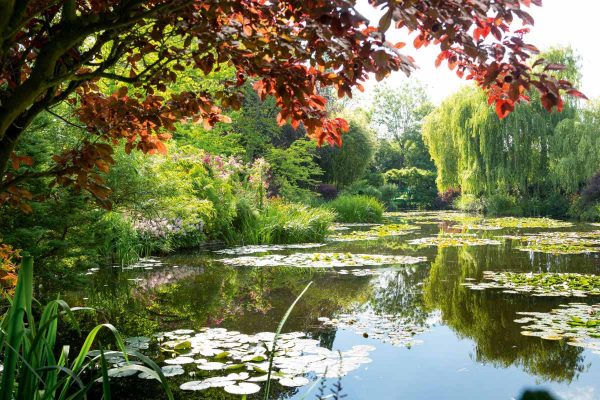
Begin in the Water Garden, created over a decade from Monet’s fascination with Japanese design.
Your guide will explain the planting of bamboo, peonies, ginkgoes, and the water lilies that inspired his Nymphéas. Cross the Japanese-style bridge and view the pond from the vantage points where Monet studied changing light and reflection.
Clos Normand Garden & Monet’s House
Walk through the Clos Normand, a vibrant garden leading to Monet’s home, filled with seasonal blooms, tulips, poppies, irises, and roses.
Inside the house, explore the bright yellow dining room, blue kitchen, and Monet’s private rooms decorated with his collection of Japanese woodblock prints by artists such as Hokusai and Utamaro. Your guide will discuss how Japanese art influenced Monet’s later work.
Museum of Impressionism
Visit the Musée des Impressionnismes, home to works by Monet’s contemporaries and a rotating selection of Impressionist and Post-Impressionist exhibitions.
Afterwards, stroll the museum’s colourful gardens featuring contemporary landscaping and prairie-style planting.
Afterwards, relax in your private vehicle as your driver-guide returns you to your hotel in Paris.
Day 4: Loire Valley & Chambord

The Loire Valley welcomes you with sweeping hillsides, riverside villages, and a culinary heritage of rustic rillettes, delicate Loire wines, and characterful cheeses such as Port-Salut and Valençay.
Often called the Garden of France, this landscape has inspired kings, artists, and writers for centuries.
Château de Chambord & Gardens
Your day centers on the extraordinary Château de Chambord, one of Europe’s most remarkable Renaissance castles.
Commissioned by Francis I and influenced by Leonardo da Vinci, Chambord combines royal spectacle with mathematical precision.
Inside, explore grand halls, 426 rooms, 282 fireplaces, and the famous double-helix staircase, an architectural marvel that allows two people to ascend without crossing paths.
Outside, the estate unfolds over 5,440 hectares, roughly the size of central Paris, encircled by 32 km of walls, making it the largest enclosed park in Western Europe.
The meticulously restored formal gardens, reopened in 2017 after an ambitious reconstruction, are a highlight: more than 800 shrubs, 600 trees, thousands of flowering plants, and immaculate lawns laid out in perfect geometric symmetry, truly a garden fit for a king.
Day 5: Amboise: Royal Castles, Da Vinci’s Legacy & Medieval Charm
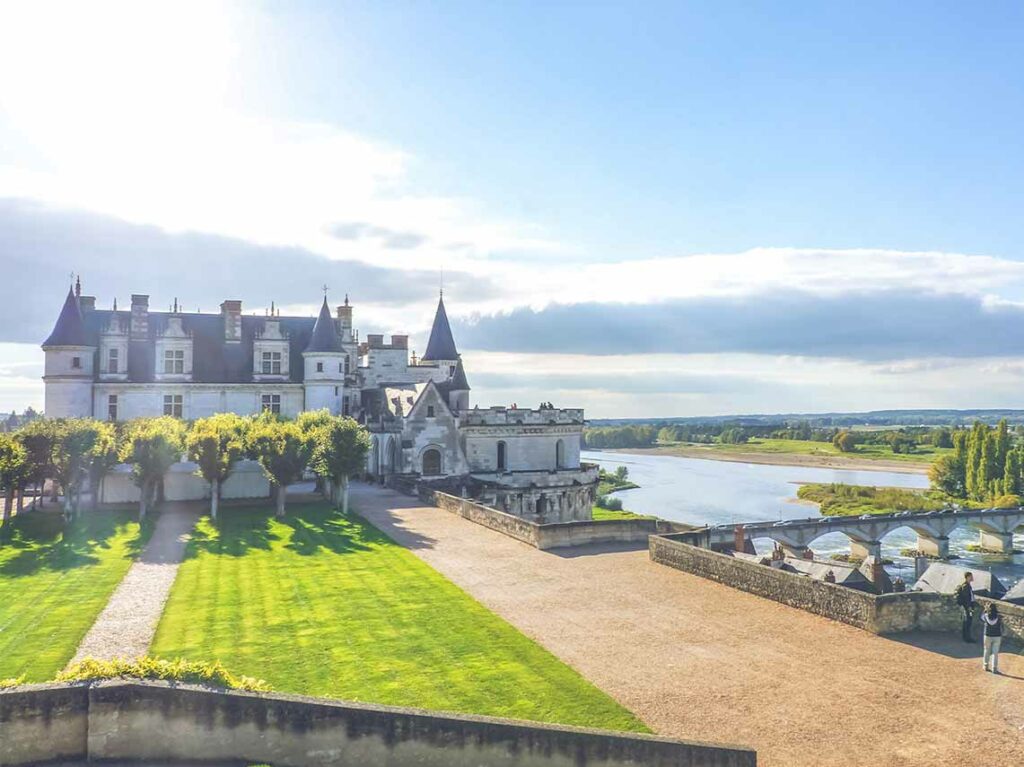
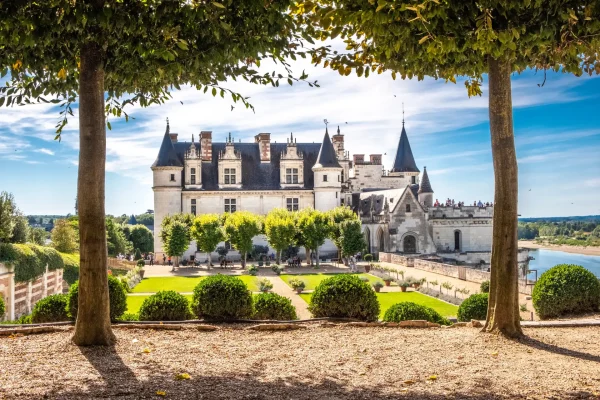
High above the Loire, the Château d’Amboise once served as a favored residence of French kings. Its towers and ramparts still dominate the skyline, while inside, Gothic and Renaissance rooms are adorned with tapestries, carvings, and artworks that bring courtly life vividly to life.
Your private tour also explores the terraces and formal gardens overlooking the river.
Château du Clos Lucé – In Leonardo’s Footsteps
A short walk through town leads to Château du Clos Lucé, the final home of Leonardo da Vinci.
Here you discover a more intimate world: the rooms where he lived and worked, and gardens filled with life-size models of his ingenious machines. You’ll hear how Francis I invited Leonardo to Amboise and even had an underground passage built from the royal château so he could visit the artist in private, an extraordinary testament to their relationship.
As the day softens into evening, enjoy a moonlit walk amongst Amboise’s medieval streets.
Day 6: Loire Valley – Tours to Bordeaux
Medieval Streets, Gothic Grandeur & a High-Speed Journey South await on day six.
Vieux Tours – Half-Timbered Heart of the City
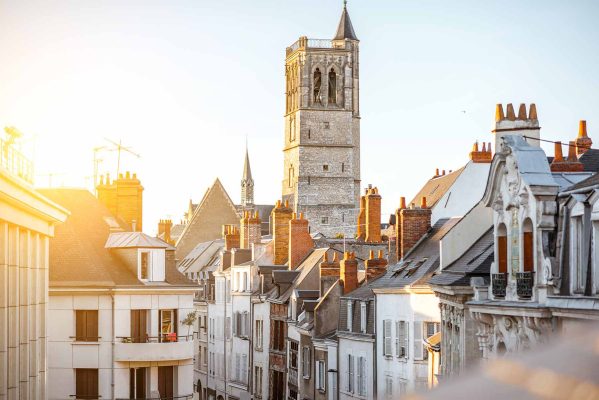
The largest city in the region, Vieux Tours blends historic charm with a vibrant urban feel, as medieval houses lean over narrow streets and lively squares, evoking the city’s prosperous past.
Walking these lanes offers a glimpse of daily life shaped by centuries of trade, pilgrimage, and river commerce.
Saint-Gatien Cathedral
Towering above the old town, Saint-Gatien Cathedral is a masterpiece of Gothic architecture.
Its elaborate façade, soaring vaulted nave, and richly colored stained-glass windows create a dramatic, almost cinematic atmosphere. Inside, you’ll encounter side chapels, a tribute to Joan of Arc, and a finely restored 16th-century organ, reconstructed to match its original appearance.
Before departing, pause at one of Tours’ riverside restaurants for lunch overlooking the Loire.
This is a final opportunity to savor regional cuisine and wines while enjoying the broad sweep of the river that has shaped so much of France’s history and identity.
TGV to Bordeaux & Chauffeured Arrival
Later, your driver escorts you to the station, where you board the TGV to Bordeaux, gliding south in just over two hours.
On arrival, a private chauffeur waits at the platform to assist with your luggage and transfer you to your hotel.
Day 7: Bordeaux
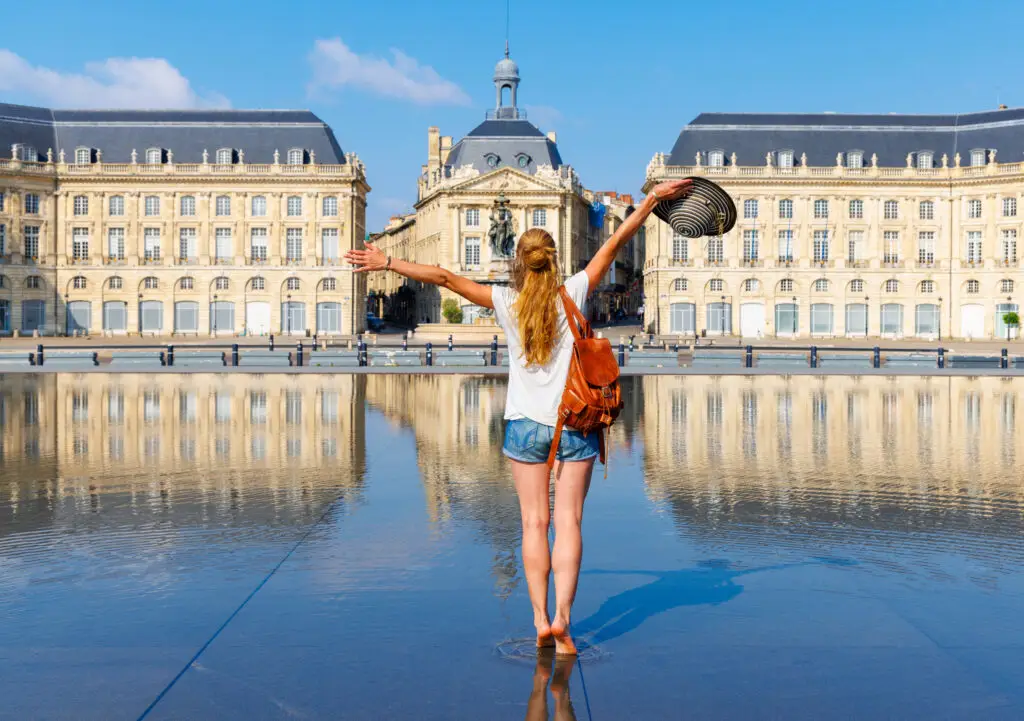
Bordeaux rests along France’s southwest Atlantic edge, a city whose elegant 18th-century beauty earned both the historic center and its port UNESCO World Heritage status in 2007.
With over 350 Monuments Historiques, it boasts more protected buildings than any French city except Paris.
Place de la Bourse & the Water Mirror
Your private exploration begins at the Place de la Bourse, a harmonious neoclassical ensemble designed by Jacques Gabriel, the architect of Versailles’ grand courtyards.
Just opposite lies the Miroir d’Eau, the world’s largest reflecting pool. A veil of mist sweeps across its granite surface every 15 minutes, creating dreamlike reflections of the square, an irresistible setting for photography.
La Grosse Cloche
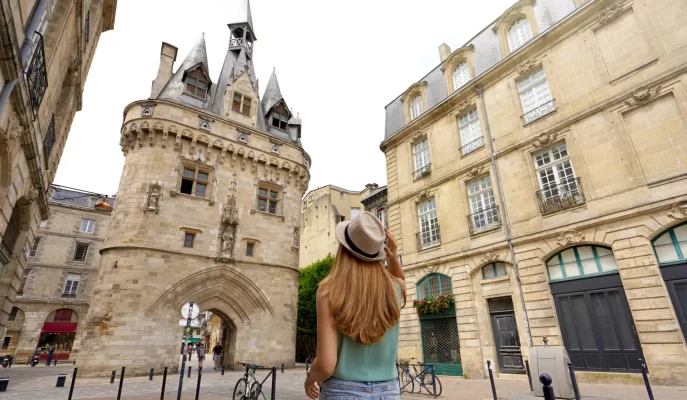
One of Bordeaux’s oldest landmarks, La Grosse Cloche once rang out across the medieval city to mark festivals and warnings.
Today, its fortified gateway still shelters the old prison and dungeons, offering a powerful glimpse into Bordeaux’s Middle Ages.
Between architectural marvels, Bordeaux dazzles with 35+ Michelin-starred restaurants and Rue Sainte-Catherine, Europe’s longest shopping street at 1.2 km. Luxury boutiques, independent artisans, cafés, and pâtisseries line this lively boulevard, perfect for browsing or indulging in regional specialties.
Day 8: Bordeaux to Arcachon
Your journey continues to Arcachon, a refined coastal town officially founded in 1857 under Napoleon III. It flourished as a Belle Époque wellness retreat, beloved by writers and artists such as Dumas and Toulouse-Lautrec, and remains a sophisticated seaside escape.
Ville d’Hiver – Grand Villas & Architectural Curiosities
Begin among the pine-covered hills of the Ville d’Hiver, home to extravagant 19th-century villas.
Your guide highlights architectural gems ranging from chalet-style mansions to neo-Gothic fantasies. Notable examples include Villa Faust, inspired by Moorish palaces, and Villa Trocadéro, a lavish chalet reminiscent of a grand Swiss resort home.
Dune du Pilat
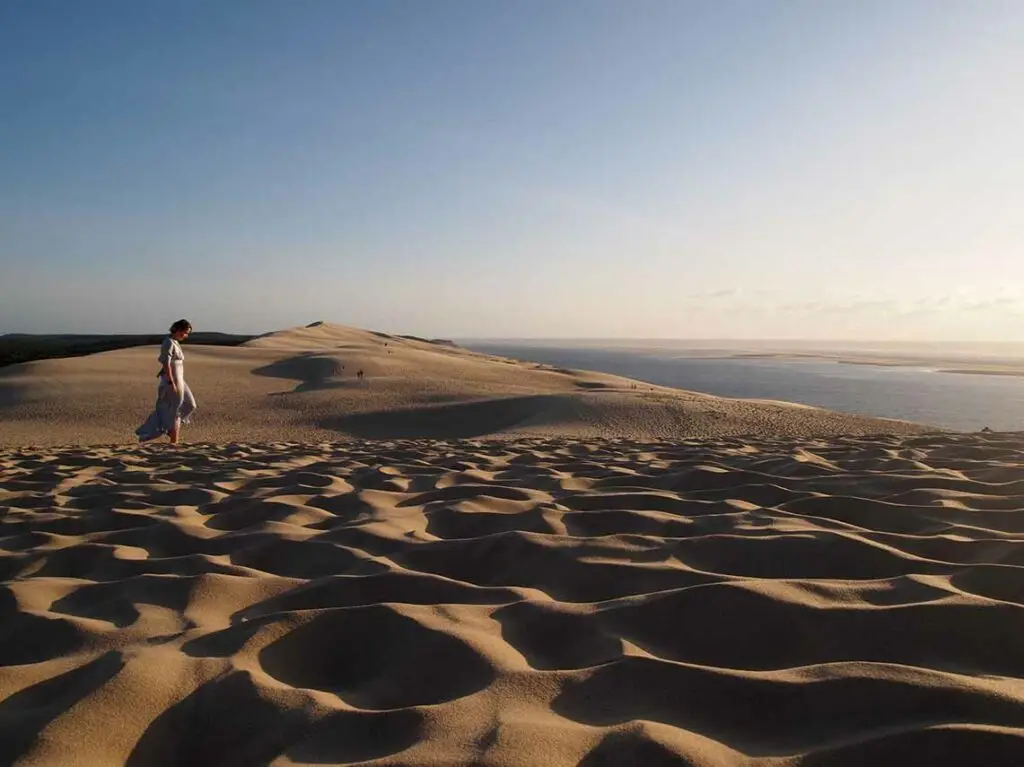
A short drive brings you to the Dune du Pilat, France’s second most visited natural landmark and the tallest dune in Europe.
With over 60 million cubic meters of sand, it rises 110 m and stretches more than 2.5 km along the coast. A staircase leads you to sweeping views of the Arcachon Basin, the Banc d’Arguin nature reserve, and the Atlantic surf—a breathtaking panorama worth lingering over.
The region offers countless opportunities to unwind beside the sea. Choose one of Arcachon’s broad public beaches or follow your driver-guide to quieter coves for a more private coastal experience.
Arcachon Oysters – A Taste of Terroir
Evening brings the chance to dine in one of Arcachon’s acclaimed seafood restaurants.
Local oysters, harvested just meters away in the cold Atlantic waters, take pride of place on the menu, an essential taste of the region.
Day 9: Welcome to the French Basque Country
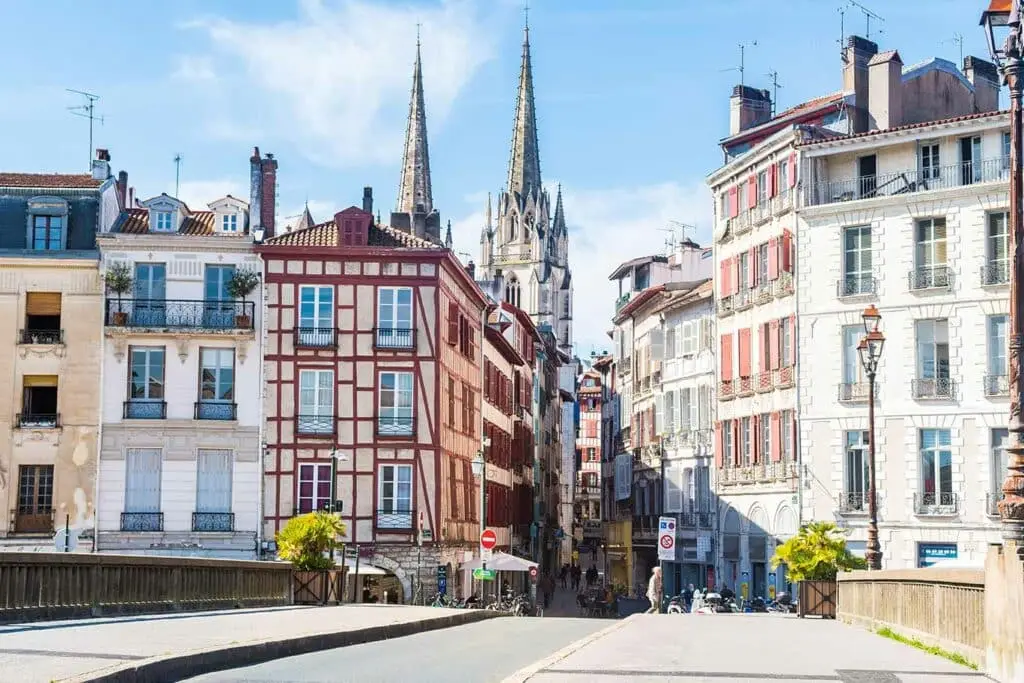
Crossing into Bayonne reveals a world shaped by deep cultural roots.
Red-and-white Basque flags line balconies, and street signs appear in both French and Euskara, Europe’s oldest surviving language. The region straddles France and Spain yet belongs to neither fully—a fiercely proud territory with its own traditions, cuisine, and history.
Musée Basque – Stories of an Ancient People
Your day begins at the Musée Basque, home to France’s most extensive collection of Basque artifacts. Exhibits explore boat-building, pastoral life, woodcarving, and traditional sports, offering a vivid portrait of a culture that traces its origins back to prehistoric times.
Bayonne Cathedral & Cloisters
Nearby, the twin spires of Bayonne Cathedral rise above the old town.
Built for medieval pilgrims traveling toward Santiago de Compostela, the cathedral blends Romanesque foundations with soaring Gothic vaults. Inside, admire carved chapels, vibrant stained glass, and the shrine of Saint-Léon de Carentan.
The adjacent cloisters, completed in 1240, are among the largest and most atmospheric in France.
Rue d’Espagne – A Taste of Basque Life
A stroll along Rue d’Espagne reveals lively brasseries perfect for sampling Basque dishes, think cured Bayonne ham, piperade, and Irouléguy wines.
Chocolate Street – Artisans of Cacao
Bayonne is also France’s historic chocolate capital. Along Chocolate Street, artisans still craft chocolate using traditions brought by Jewish chocolatiers who fled the Spanish Inquisition.
A guided workshop visit introduces you to the techniques behind Bayonne’s celebrated chocolate, ending, naturally, with a tasting session.
As evening settles in, the Nive River glows with reflections from waterfront restaurants. Choose a spot specializing in fresh Atlantic seafood, pairing local dishes with Basque wine for a memorable end to your day.
Day 10: Biarritz
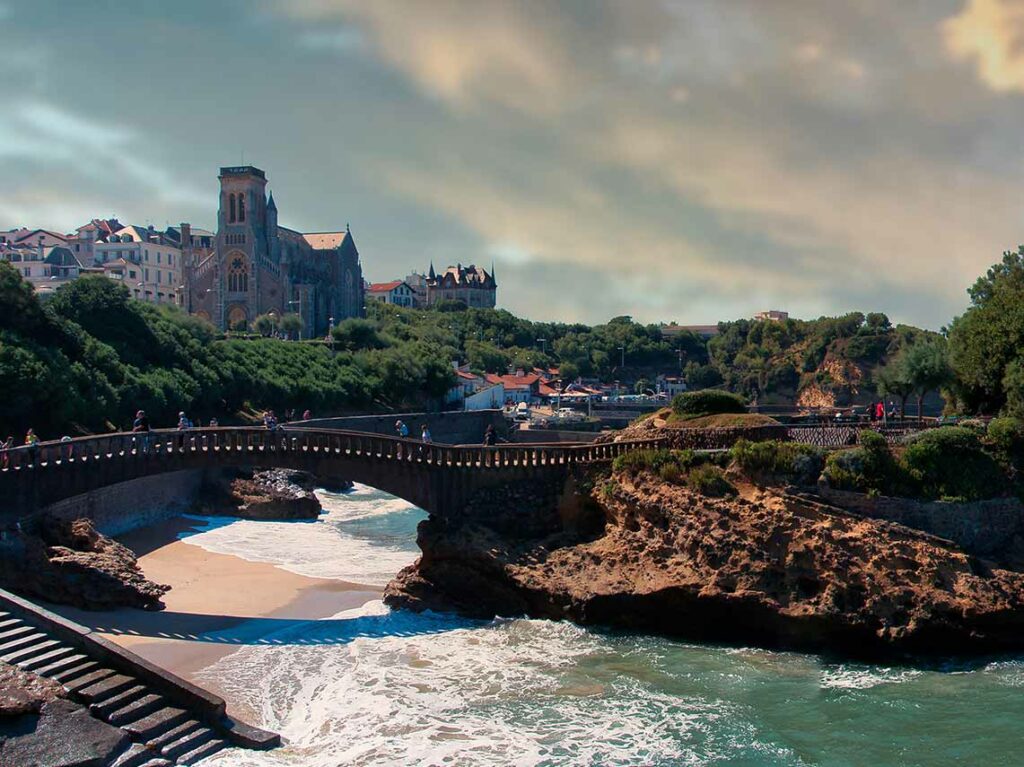
A short journey south of Bayonne brings you to Biarritz, a coastal city with an unexpectedly layered past.
Though the Romans christened the region Aquitania, the earliest actual settlers were Viking fishermen who recognised the area’s rich waters and established a village called Bjarnihus. This name eventually evolved into Biarritz.
Centuries later, the arrival of Empress Eugénie in the 1850s transformed the quiet port into a glamorous imperial resort. Her beachfront palace, today the Hôtel du Palais, attracted European royalty, including Queen Victoria, firmly placing Biarritz on the map as a retreat for the elite.
Sainte-Eugénie Church
Your private tour begins at Sainte-Eugénie Church, which rises above the Vieux-Port with sweeping views of the ocean.
Commissioned in 1856 and built in a Roman-Byzantine style, the church honours Eugénie herself. Inside, stained-glass windows designed by Merson cast jewel-like colour across the stone, while fonts decorated using Manila seashells provide a surprising detail that links Biarritz to far-flung corners of the world.
Port des Pêcheurs
Just below the hilltop church lies the atmospheric Port des Pêcheurs.
This small harbour is edged with around sixty tiny whitewashed fishermen’s cabins trimmed in red, green, or blue.
Their island-like charm makes this area feel more Mediterranean than Basque. One of these converted cabins becomes your lunchtime setting, with views over the busy harbour and the curve of Biarritz’s coastline.
Rocher de la Vierge
After lunch, follow the coastal path to the Rocher de la Vierge, a monumental rock crowned with a statue of the Virgin Mary.
It is reached by a metal footbridge engineered by Gustave Eiffel, and your guide shares the legends associated with the site, from miraculous rescues to tales of fishermen who once sought protection from perilous seas.
Basque Cookery Masterclass – A Taste of Tradition
Guests seeking a quieter cultural experience can step into a Basque cooking class led by an award-winning local chef. Learn how to prepare regional favourites such as piperade, axoa d’agneau, and the beloved Basque cake, culminating in a tasting that celebrates the region’s flavours.
Day 11: Tarbes – Birthplace of Foch, WWII Memory & Remarkable Gardens
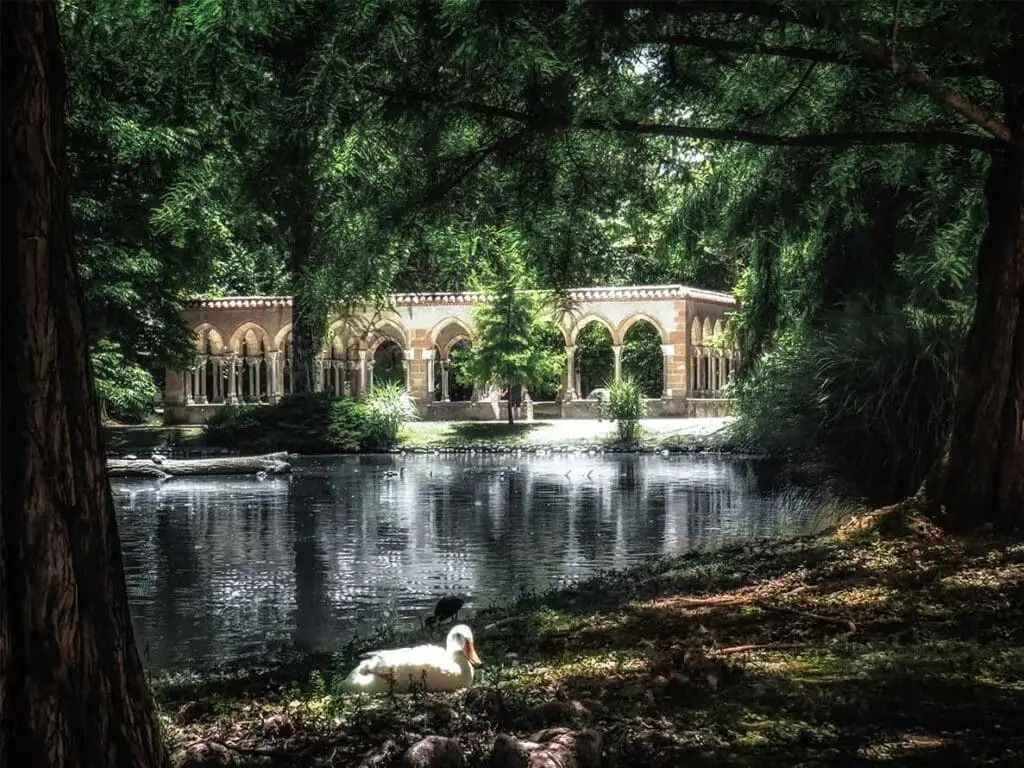
Your route now leads to Tarbes, a medieval town in southwest France closely tied to Marshal Ferdinand Foch—the Allied Supreme Commander credited with orchestrating the strategy that ended the First World War.
Musée de la Déportation et de la Résistance
Next, explore the Musée de la Déportation et de la Résistance, one of the region’s most moving collections.
Exhibits detail the clandestine efforts of Tarbes’ resistance fighters, testimonies from deportees and escaped prisoners, and objects linked to the city’s wartime struggle. Tarbes’ exceptional contribution to the Resistance earned it the Croix de Guerre, underscoring its role in protecting French freedom.
Jardins Massey
Your afternoon unfolds in the enchanting Jardins Massey, an 11-hectare public garden designed by Placide Massey, one-time royal gardener to King Louis-Philippe and former overseer of the Versailles gardens.
Awarded the prestigious Jardin Remarquable label, it blends exotic plantings, wide promenades, elegant lawns, and architectural treasures. Highlights include the Orangerie and the tranquil cloisters, whose 40 arches curve gracefully through the landscape.
Arrival in Toulouse
As the day concludes, your driver-guide transports you to Toulouse, your base for the next three nights.
Day 12: Albi Day Trip
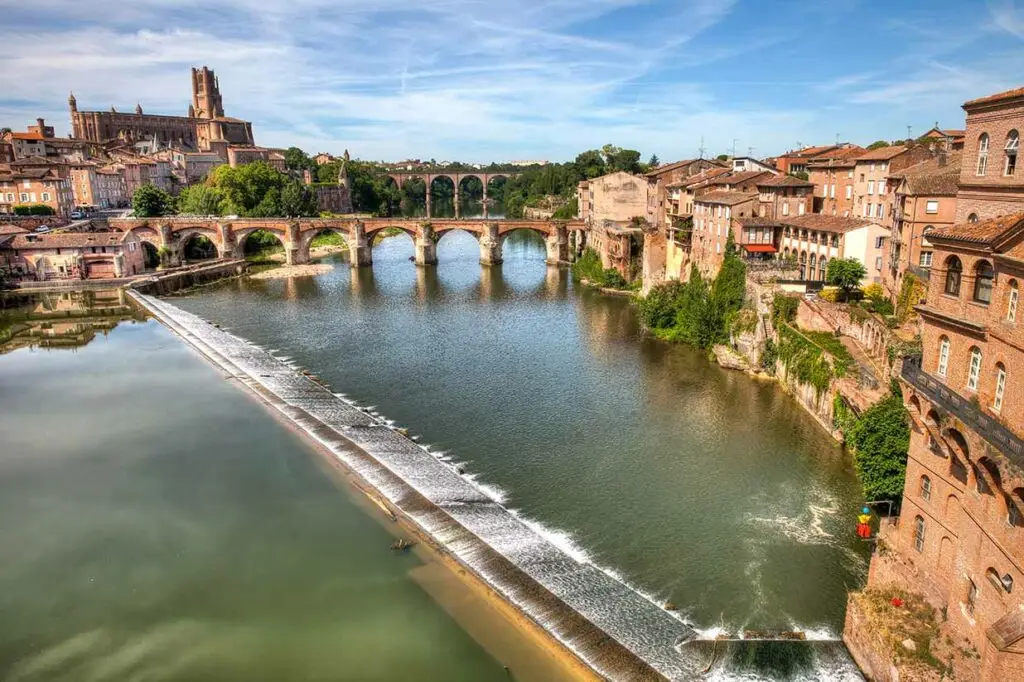
Today’s journey carries you northeast to Albi, a radiant brick-built city dominated by the immense Sainte-Cécile Cathedral.
Sainte-Cécile Cathedral
Your private tour begins inside this monumental structure, considered the largest brick building in the world.
Its 78-metre bell tower and fortress-like exterior give way to an interior rich in carved stone, intricate frescoes, and elaborate painted vaults. The scale and artistry make it clear why UNESCO has recognised the cathedral and its neighbouring buildings.
Palais de la Berbie
Just steps away stands the Palais de la Berbie, once the bishop’s palace and now home to the world’s most extensive collection of works by Henri de Toulouse-Lautrec, Albi’s most celebrated native.
Your guided visit offers insight into his life, influences, and the cultural world he captured, concluding in the palace’s exquisitely manicured formal gardens.
Old Town
Albi’s old quarter is a delight to explore: narrow streets lined with art galleries, artisan pâtisseries, and characterful cafés.
Pause for lunch overlooking the Vieux Pont, a thousand-year-old bridge that has carried travellers across the Tarn for centuries.
Spend part of the afternoon strolling the riverwalk and taking in Albi’s most iconic vistas—many of the city’s famous photographs are captured from the opposite bank, and your guide will point out the ideal vantage points.
Your driver-guide then returns you to Toulouse, passing by the Vieux Pont once more for a final photograph before your evening at leisure.
Day 13: Toulouse to Castelnaudary Day Trip
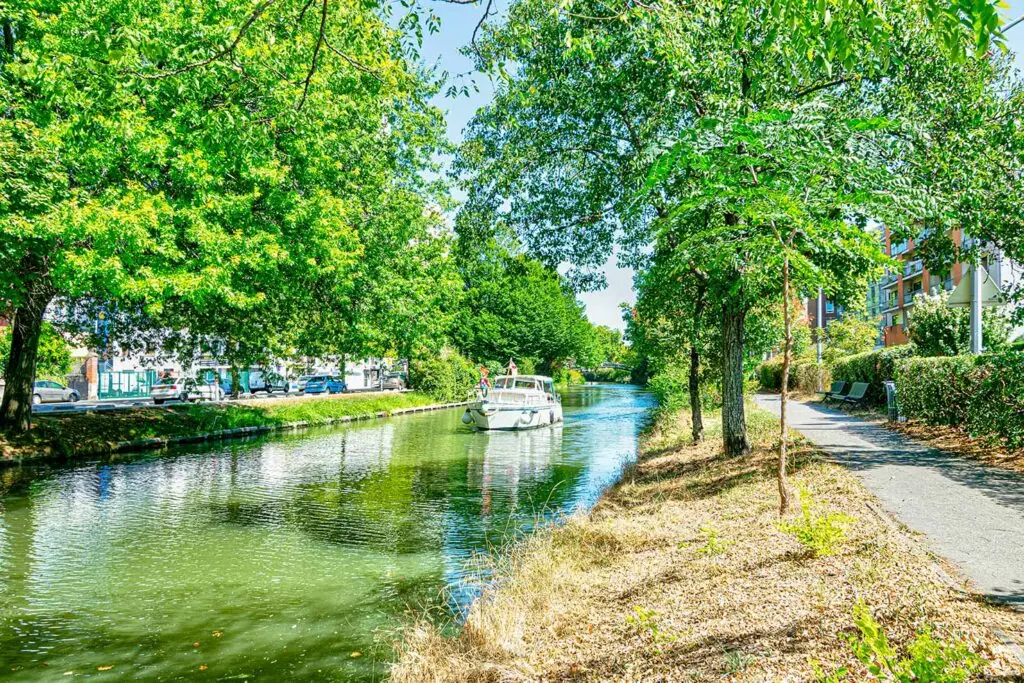
A gentle drive south of Toulouse brings you to Castelnaudary, a town best known as the birthplace of cassoulet and home to the Grand Bassin, the largest expanse of open water along the Canal du Midi.
Canal du Midi
The Canal du Midi, stretching 241 km from Toulouse to the Mediterranean, stands among France’s most impressive feats of engineering.
Built in the 17th century and now recognised as a UNESCO World Heritage Site, it is admired both for its technical brilliance and its serene beauty.
Your exploration includes the Grand Bassin and the monumental obelisk at the Seuil de Naurouze, the watershed divide of the canal.
Markets & Culinary Traditions
Castelnaudary’s heart beats around its traditional markets, where cured meats, seasonal produce, and artisan goods fill the stalls.
Take time to browse and sample charcuterie before settling into one of the town’s inviting restaurants. This is the ideal place to enjoy a bowl of authentic cassoulet, prepared with beans from the Lauragais and rich local duck confit, an essential experience in the town that proudly calls itself the cassoulet capital of the world.
Return to Toulouse
Later, your driver-guide returns you to Toulouse for some relaxed, last-minute shopping.
Depending on your interests, you’ll be guided to the best neighbourhoods. Many travellers gravitate to the Carmelite Quarter, known for its artisan chocolatiers, pâtisseries, and independent boutiques. Many shops here can arrange shipping directly to your home, making it easy to bring a taste of France with you.
Day 14: Departure
After enjoying breakfast in the hotel restaurant, your driver guide will be waiting to take you and your luggage to your next destination.
Relax and finish your coffee whilst your driver-guide takes care of your luggage, and when you are ready, step into a perfectly air-conditioned luxury car for your next journey.